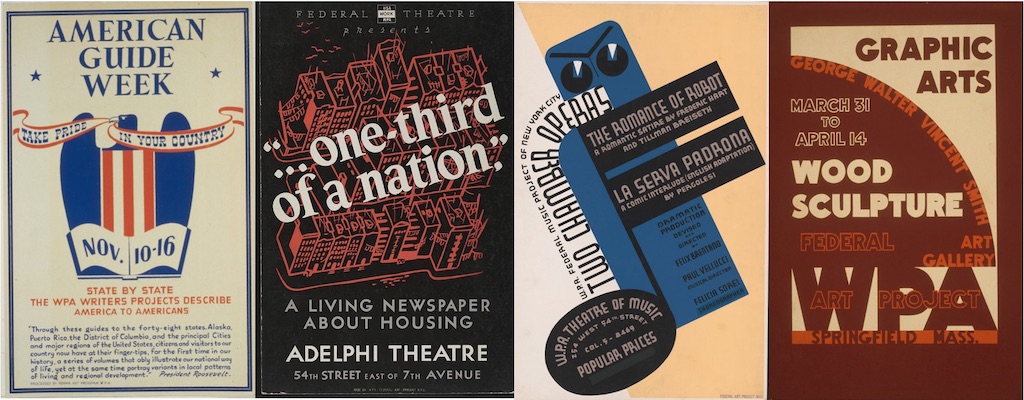
Social Separation During the Great Depression: How the WPA Broke Boundaries, and Drove America in a New Direction.
One constant throughout American history has been social division, and strict classism, which has been displayed in many aspects of American life and culture since the founding of the country. However, when the great stock market crash of 1929 struck the globe, the United States economy was crippled overnight, and every social class felt the effects of this catastrophe in one way or another. Although the Great Depression began during the presidency of Herbert Hoover it wasn’t until Franklin Delano Roosevelt took office that serious and effective recovery efforts emerged. Hoover’s policies during the beginning of the Depression centered on further prevention of global economic contraction (The American Yawp), which unfortunately did very little to aid suffering Americans or rebuild the American economy. FDR, however, created a series of administrative institutions, known most famously as the New Deal. One of the most effective institutions within the New Deal was the Works Progress Administration, or WPA. The various projects of the WPA not only began to slowly, but successfully, rebuild the American economy, but provided a new means of breaking social boundaries. The WPA provided thousands of jobs in fields that historically hadn’t seen much attention by the American people, and broke down walls that had separated the American people by class, economic standing, race, gender, and much more. The effects of the success of the WPA still linger in some aspects of American society today.
Credits
Elise Holliday