Conclusion
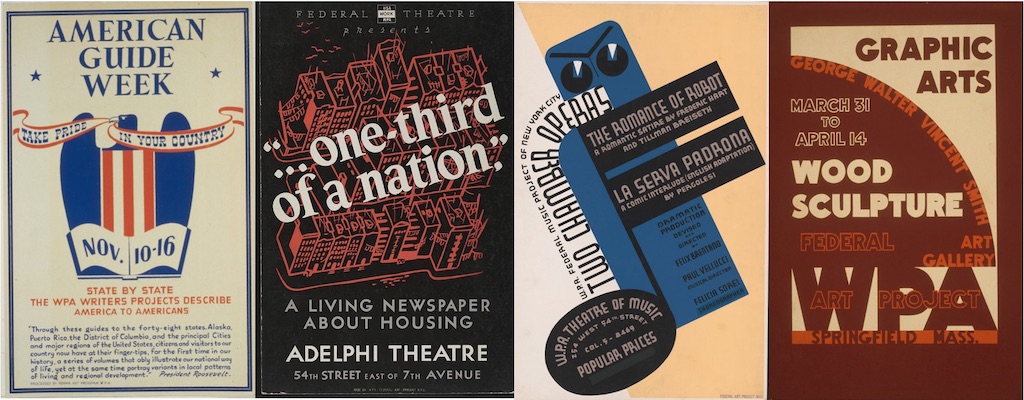
Through our skills and tools, the Federal Theater Project was overall, successful. However, along the way, it did marginalize groups that it intended to protect in the name of deciding which art was suitable for the American public's eyes under the pen name of the United States Government. What is clear, is that it did foster a new space to create art for people of color by people of color and with people of color. Of course, the Federal Theater Project, like any other event in American history is another stitch in the Long Civil Rights Movement and the struggle of oppressed people in the United States. The art they created stands the test of time as it is still being performed today and the buildings they once filled now are historical museums of their accomplishments. Clearly, the Federal Theater Project progressed the rights of people of color by exposing the American public to their work and workers, and by putting them on the same playing field as white actors, it allowed them to be seen equally in any production. All of these conclusions are with the suspension of belief that theatergoers possess; the people who came to the Negro Unit productions were not people who were irrevocably racist. They were likely people who were more open-minded. The Federal Theater Project also allowed people to see the theater who had not before because they made it more affordable. Overall, the Federal Theater Project had a rough beginning and some dark ends but did its job as a part of Federal Project Number One.
Works Cited
The Editors of Encyclopaedia Britannica. “WPA Federal Theatre Project.” Encyclopædia Britannica, Encyclopædia Britannica, Inc., 4 Apr. 2019, www.britannica.com/topic/WPA-Federal-Theatre-Project.
Lewis, Femi. “30 Highlights in African-American History During the 1930s.” ThoughtCo, ThoughtCo, 7 July 2019, www.thoughtco.com/african-american-history-timeline-1930-1939-45427.
Library of Congress. “American Life Histories: Manuscripts from the Federal Writers' Project, 1936 to 1940, Available Online.” The Library of Congress, Congress.gov, 2019, www.loc.gov/collections/federal-writers-project/.
Library of Congress. “Federal Theatre Project, 1935 to 1939, Available Online.” The Library of Congress, Congress.gov, 2019, www.loc.gov/collections/federal-theatre-project-1935-to-1939/.
Ross, Ronald. “The Role of Blacks in the Federal Theatre, 1935-1939.” The Journal of Negro History, vol. 59, no. 1, 1974, pp. 38–50. JSTOR, www.jstor.org/stable/2717139.
Smith, Wendy. “The Play That Electrified Harlem.” The Library of Congress, Congress.gov, 2019, www.loc.gov/collections/federal-theatre-project-1935-to-1939/articles-and-essays/play-that-electrified-harlem/.