Browse Exhibits (40 total)
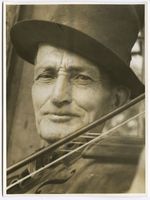
Music in the 1930's
The 1930’s were shape the contrasting attitudes caused by the beginnings of Old Hollywood and the Great Depression. Music during this time was just as impacted by these events and developing technology. The 1930’s paved way for some the most diverse times in music America had ever seen, from popular styles ranging from swing to jazz to folk to musicals. These vast changes in music begs the question: How exactly did these hard and changing times of the 1930’s impact music in America?
These times were very difficult for Americans, the Depression and Dust Bowl completely uprooting the lives of the everyday American. Along with other ventures, music became a major source of revenue, jobs and entertainment. While music had a great impact on people in the 1930’s, the people of 1930’s America had even greater impact on music. Despite musicians also taking a big hit from the Depression, the sufferings of musicians actually became a catalyst for music development. This project will depict just how New Deal programs in the 1930’s helped support the arts as never seen before, creating an entirely new style of American music.
Natalie Cumming-Fransisco P. Lord
An image analysis project with Fransisco P. Lord, and the photo glitched.

Perspectives of women in the 1930s
My exhibit is exploring the roles of women and how the perspectives of women changed in the 1930s. During WW1 many women had to step up and start working because many of the men had gone out to war. Through my skill assignments, I will show what women did and how the perspectives started to change. My first page will show an annotated image of two women working newly in the industry. The annotations will help explain the photo and why I am using it. Secondly, I used glitched image. The migrant women was the photo I glitched and explain the desperation that the women felt at this time. Thirdly, I used voyant. This skill helps me explain the perspective of women that were starting to work in New York for the first time. Lastly, I state my historical question again and give a summary of what my project was about.
Bender, Albert. 1936. "Jobs for girls & women if you want a good job in household employment apply at or write to Illinois State Employment Services." Still image. 1936. https://www.loc.gov/pictures/resource/cph.3b53089/?co=wpapos
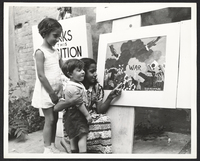
Shannon Mulligan: Children's art exhibit
Sol Horn photographs three young children observing a painting that was being shown at an art exibit sponsored by the Federal Arts Project.
Social Separation During the Great Depression: How the WPA Broke Boundaries, and Drove America in a New Direction.
One constant throughout American history has been social division, and strict classism, which has been displayed in many aspects of American life and culture since the founding of the country. However, when the great stock market crash of 1929 struck the globe, the United States economy was crippled overnight, and every social class felt the effects of this catastrophe in one way or another. Although the Great Depression began during the presidency of Herbert Hoover it wasn’t until Franklin Delano Roosevelt took office that serious and effective recovery efforts emerged. Hoover’s policies during the beginning of the Depression centered on further prevention of global economic contraction (The American Yawp), which unfortunately did very little to aid suffering Americans or rebuild the American economy. FDR, however, created a series of administrative institutions, known most famously as the New Deal. One of the most effective institutions within the New Deal was the Works Progress Administration, or WPA. The various projects of the WPA not only began to slowly, but successfully, rebuild the American economy, but provided a new means of breaking social boundaries. The WPA provided thousands of jobs in fields that historically hadn’t seen much attention by the American people, and broke down walls that had separated the American people by class, economic standing, race, gender, and much more. The effects of the success of the WPA still linger in some aspects of American society today.
Test Exhibit
Test for iframes

The Federal Theater Project's Nationwide Expanse and Implications
This exhibit explore the impact of the Federal Theater Project on the progression of rights for people of color in the 1930s in the US.
The Great Depression Through the Eyes of Immigrant Americans
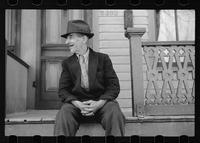
This project was inspired by my great grandmother whose family moved to the United States from Poland right before the Great Depression. She had always told me that this period in American history was so much harder for immigrants but never really delved into how or why. So that’s what I set out to discover with this project. I wanted to answer the question: How and why the Great Depression harder for Immigrant Americans. I believe that the main reason it was harder for immigrant Americans was discrimination and language barriers, but this exhibit delves deeper into that question and reveals not only the hardships but also some of the joys of Immigrant Americans during the depression era.
I designed this exhibit in a way that feels like a story. I combined photos and stories in order to create a more personal connection to the people referenced. I also used a geo-location map to showcase all the places Immigrant Americans lived and how no matter where they were in the U.S.A. they all faced their own hardships. I wanted this exhibit to feel alive and that's why I choose to set it up the way I did. To make you feel emerced in what I have created, to tell the stories of these people who deserve to be heard.