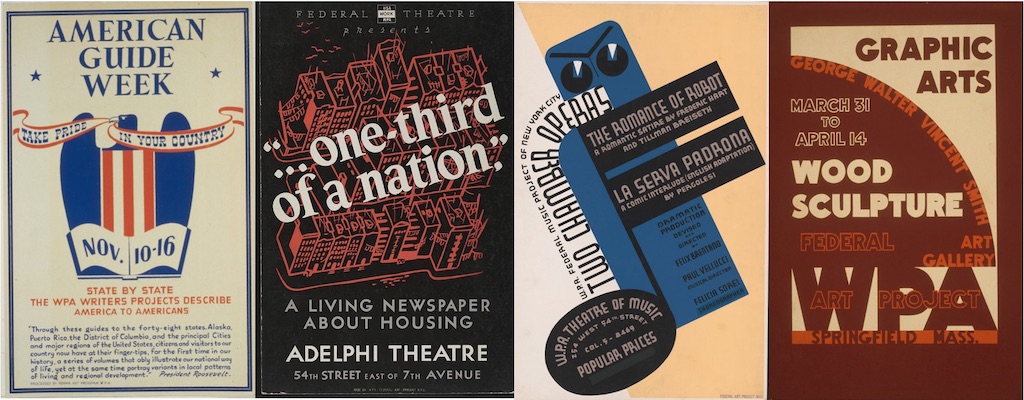
Browse Exhibits (40 total)
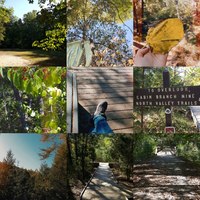
The Lasting Impact of the Cultural New Deal in Virginia; Prince William Forest Park
Prince William Forest Park has a history of rebirth. Prince William Forest Park was desolated farmland coming from the ashes, and grew into a vibrant forest. Today It is a picturesque example of what the east coast looked like before Columbus. How does Prince William Forest Park exemplify lasting impact of the cultural, economic, and social changes of the Great Depression?
With the shock of the collapse of the American Stock exchange came the World of the Great Depression. This world left many destitute and poor workers to roam and to starve. American Farm Land went to waste, and the unemployment skyrocketed. With the collapse of the economy the generation rose up to combat this terrible infliction with a new strong leader. With the election of Franklin Delano Roosevelt came the beginning of the Cultural New Deal. This change kick started the Federal One Project that gave Northern Virginia and the United States Prince William Forest Park.Prince William Forest Park is only one of many sites created through the Cultural New Deal, these are known as The Living New Deal. Many of these changes that underwent in the 1930's have remained as community pillars for those in the area.
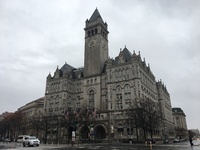
The Message of the New Deal in DC: Then and Now
The New Deal's projects created some of the biggest and most meaningful creations throughout the Nations Capital. Many of the creations are most likely still being used and today for their original purpose. Howerver, there are some that this is no longer the case. It could also be that many of the sites that are still around do not hold their original message or meaning. So, do the some of the remaining new deal sites still hold their original historical message or theme. This question will be answered in multiple ways. First, through the use of timelines one can see how these buildings and creations were first made and how they are today. This only truly gives an overview of the original question. In order to further understand there will also be image analysis of the sites today. This is where an in depth analysis of the sites and there meaning then and now will take place. Finally, a mapping segment will be used to further explain the siginificance of these sites and where they are in Washington D.C. With these three pages a conclusion will be made in the "Legacy and Lasting Impact" page. Here the final thoughts on the overall question will be shown.
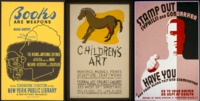
The Public and the Poster: New York WPA Posters from 1936-1943
This project will explore the Works Progress Administration (WPA) posters. "The posters were designed to publicize exhibits, community activities, theatrical productions, and health and educational programs in seventeen states and the District of Columbia," however, I'm concentrating on those that were created for the state of New York between the years of 1936-1943 ("WPA Posters," n.d.). The main focus is to examine what social issues were most prominently featured on WPA posters in New York. How did these social issues represent the priorities of New York oppose to other states? What do the featured posters say about New York at the time? Who's included and excluded? I will research these questions using image annotation, a timeline, and mapping.
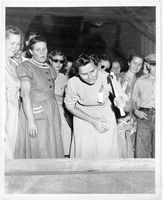
The Working Women of the 1930's
How did the role and view of women in society change with the onset of the Great Depression? They worked to survive. While it's true that the number of women in the workforce rose greatly during World War II, the seeds of that growth were planted during the Great Depression. As the economy crashed and jobs were lost left and right, women had to survive, and ensure that their families did too. Migrant mothers are a prime example, as are women who took on odd jobs for extra money, and women who joined government programs in order to secure employment.
I will be using image annotation to give physical representations of working women, image glitching to provide alternative historical perspective and a different way to look at the images, and a timeline in order to show the strides women made over the course of the 1930's.
Title Photo: Not Identified & Hemmig, R. (1939) Woman Hammering a Nail Into a Board With Spectators Looking on. Arvin California, 1939. Arvin Camp. [Photograph] Retrieved from the Library of Congress, https://www.loc.gov/item/toddbib000403/.
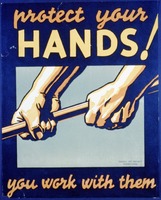
The WPA & The Reimagining of American Life
This exhibit will explore how President Roosevelt utilized both legislative policy and creative action to change the fabrics of America to allow for a different lifestyle- one that did not solely prioritize labor. Before the 1930s, labor was radically different; workers had little power, child labor was prominent, safety was not enforced, and those who tried unionizing for better conditions had to face repercussions. Roosevelt's presidency empowered the working class by giving them systemic change through labor laws, and more discretely, by disrupting the notion that labor is dispensable.
Before the 1930s, the socially constructed blueprint for survival did not consider time for art, recreation, reading, and even work safety, to be a necessity in life. But how could it, when people were working excessively long hours, there was no minimum wage, there was no pension system, and there was no federal protection for unionized workers? Roosevelt's actions transformed how Americans managed their personal lives in relation to work, but fundamentally, his presidency changed how Americans even defined the potential of what a "personal life" could be.
The first section of this exhibit will utilize a timeline to create a better understanding of President Roosevelt's two-fold method to transforming working conditions in the nation. The second section of this exhibit will use a map to highlight the increase in spaces dedicated to leisurely activities. And lastly, the final section will analyze WPA posters to show how creative action was a method used to influence the personal lives of Americans.
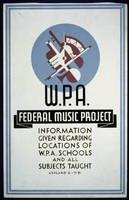
The WPA: Defining American Culture
What the WPA actually did and why it was so important to America.
Travel in the 1930s
The exhibit explores the question "How was travel integral to Americans during the New Deal and the 1930s?"
What did the Ex-Slave Narratives reveal about American culture?
The Ex-Slave Narratives were a pivotal part of the Federal Writers Project because it revealed the lives of the ex-slaves. This project gave further insight into American culture. It allowed the rest of the Americans to understand what life was like for an ex-slave and what common beliefs American culture had.
In this exhibit, I will be answering the historical question: What did the Ex-Slave Narratives reveal about American culture? The Narratives revealed that the 1930's seemed to be a time of revolution for the ex-slaves because they were able to tell their stories instead of brushing over it. They reveal what life was like and what they enjoyed to do. Throughout the exhibit, we will see how the ex-slave narratives were to be conducted with Voyant Tools, follow the timeline of the life of an ex-slave with TimelineJS, and listen to the stories of slaves with Soundcite.