Social Division pre- and post- Depression
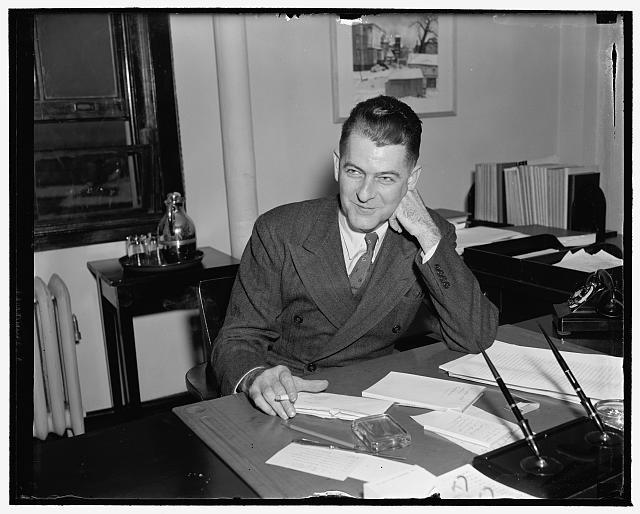
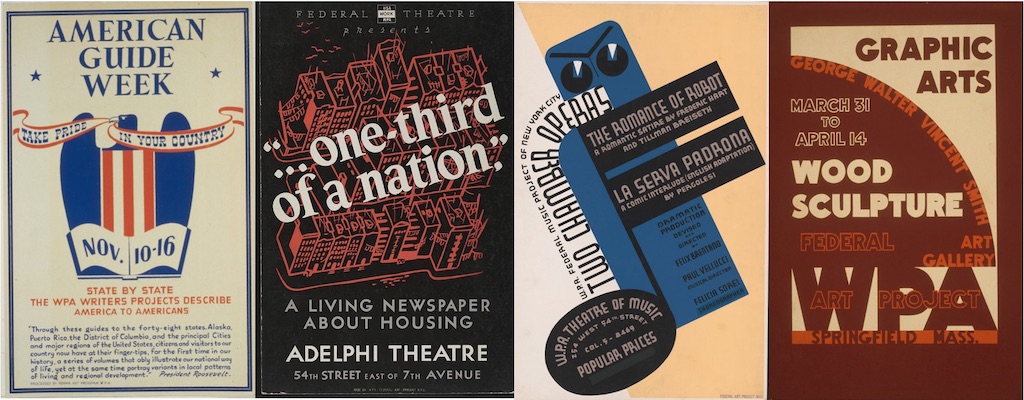
For most of its history, the US has been divided in one way or another. Whether it be by belief, culture, social and economic power, or geography, there have always been clear boundaries within American society. Until the 1930s, relatively few had ever found themselves crossing these divisions, especially ones of social class or economic power. However, when the recovery projects of the New Deal, primarily those of the WPA sprung to life, many Americans suddenly found themselves with new opportunities to embrace, regardless of their social class. Social division in the 1930s was generally similar to what we know today- there were the top 10%, the very wealthy who lost relatively little in the Depression, and who needed little aid from the WPA.
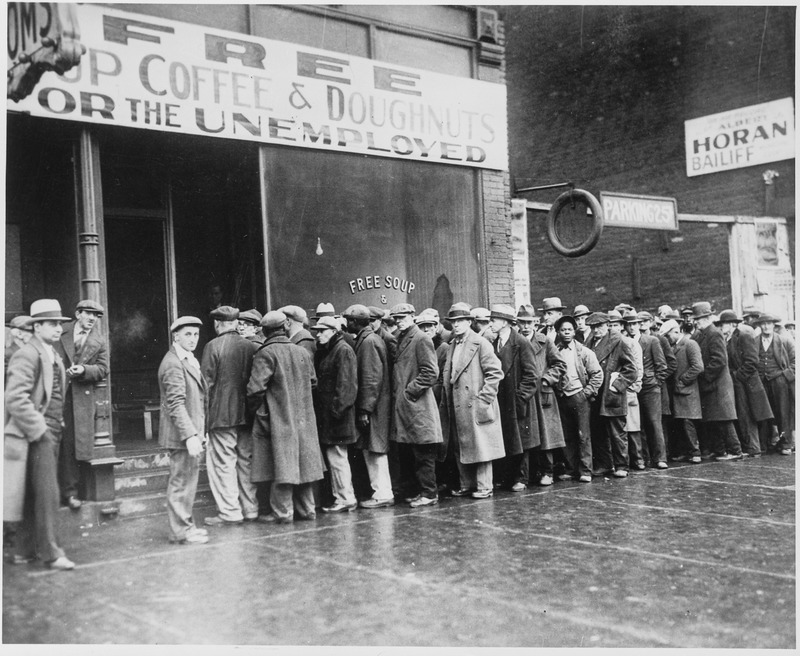
There were the middle-class Americans, who were arguably the most affected by the Depression. The majority of middle-class Americans held steady jobs, which they depended upon to support themselves and their families, and the economic crash of 1929 suddenly put many of the middle class out of work, leaving them with little means of support. The already impoverished, lower-class Americans also faced significant disparity during the Depression. Values of agricultural goods had severely fluctuated during the late 1920s, and the economic crash of the Depression, paired with a sudden and severe drought across the agricultural south and midwest (The American Yawp) made life in these regions desolate and forced the migration of thousands of Americans westward toward more fruitful soils. In an interview with one Ms. Mildred Opacich, we hear a first-hand account of living in American classism, where she describes the variance in her living conditions, as opposed to the housing and living conditions of the upper class.
Having such vibrant audio accounts from individuals who lived during the Depression brings the era to life. Ms. Opachich gives us insight into what life was life for lower-class Americans before the Depression overwhelmed the country, and brought slews of misfortune, especially to people like Ms. Opachich. The tone of her description of her daily life compared to those of the neighboring upper class is surprisingly cheerful, which gives a different sense and tone of understanding to how we might presently view the life of impoverished Americans before the Depression.