Conclusion
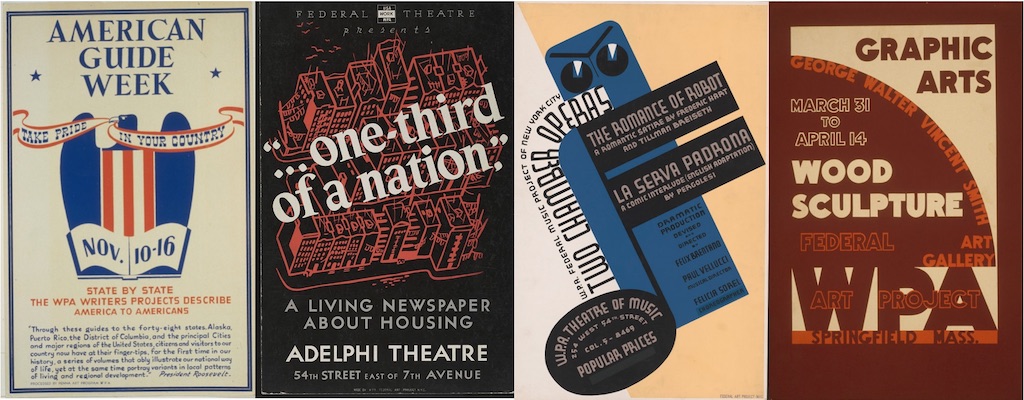
The main focus of New York's WPA posters during 1936-1943 seemed to be centered around preventing diseases, primarily syphilis and tuberculosis, promoting art exhibitions and education classes, and advertising other Federal One projects, such as Federal Theater Project productions held in the city. My conclusion is that New York had a large desire to make sure its citizens were educated on various topics, including health, the arts, and trades, and while minority groups were visually excluded, they weren't in terms of programming.
The Library of Congress holds more than 900 of the WPA posters, "with the strongest representation from California, Illinois, New York, Ohio, and Pennsylvania," but out of all these states, New York has the most diverse array of posters ("WPA Posters," n.d.). California seemed to produce posters that predominately promoted their theater scene, whereas Ohio and Pennsylvania's posters were very landscape focused. New York's poster diversity could have also spoke to the times, in the sense that New York was one of the most culturally, racially, and ethnically rich states during the 1930s and 40s.