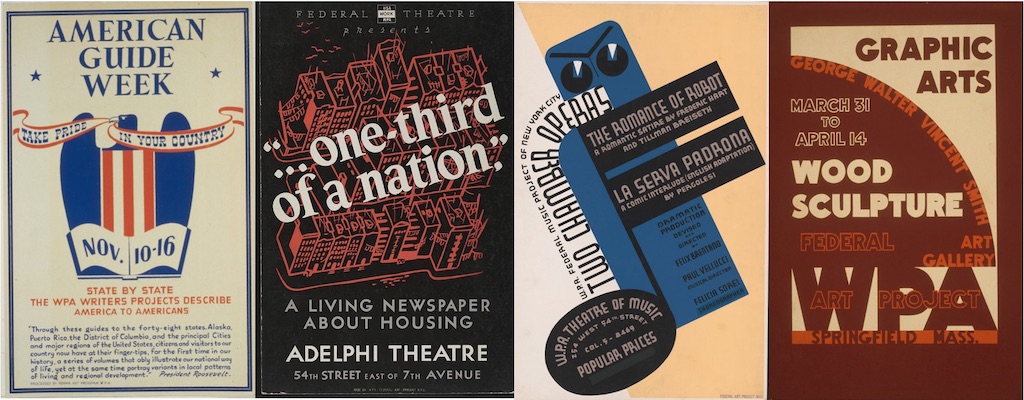
During the 1930s and the era of the New Deal, travel brought to the American people opportunities that positively impacted their lives during a rather negative time. They were presented with the opportunity to settle in new places with hopes of a better life, given new styles of music that had not yet hit the mainstream, effectively revolutionizing the way American music was viewed not only then, but today, and they were encouraged through the federal government to spend time touring their country and reevaluating what it truly meant to be an American. Travel and tourism can largely been seen as a means to escape life for a moment, however during the 1930s, it was used to convince people that better times were to come. The travels of the American people had a direct impact on the development of a new American culture.
References:
Bond, S. E. (2017, October 20). Mapping Racism And Assessing the Success of the Digital Humanities. Retrieved from https://sarahemilybond.com/2017/10/20/mapping-racism-and-assessing-the-success-of-the-digital-humanities/.
Fanslow, R. A. (1998, April 6). The Migrant Experience : Articles and Essays : Voices from the Dust Bowl: the Charles L. Todd and Robert Sonkin Migrant Worker Collection, 1940-1941 : Digital Collections : Library of Congress. Retrieved from https://www.loc.gov/collections/todd-and-sonkin-migrant-workers-from-1940-to-1941/articles-and-essays/the-migrant-experience/.
Filene, B. (2008). Romancing the folk: public memory & American roots music. Chapel Hill: Univ. of North Carolina Press. pg 133, 136.
Shaffer, M. S. (2002). "Narrating the Nation." See America first: tourism and national identity, 1880-1940. Washington, D.C.: Smithsonian Institution.
Still image metadata can be found in "Stanger" collection.