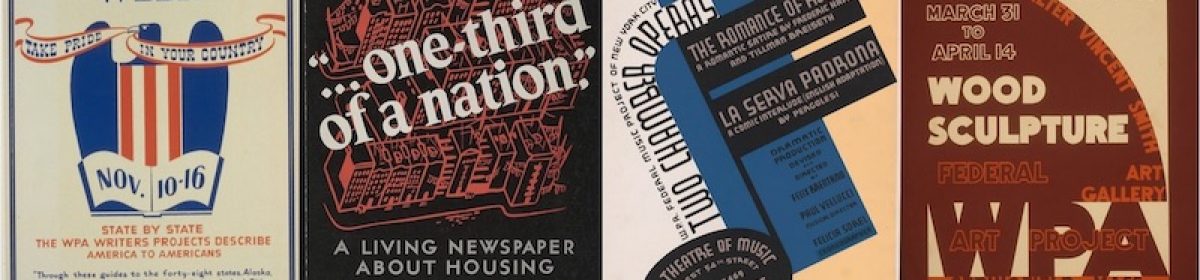
My initial question was ‘How were the works of the Federal Writers Project perceived and interpreted by different classes of people (social, racial, economic, etc.)?’ I had a sense of what I might find due to the differences of opinion towards the project that has been heavily discussed in class as well as in the readings. 1 It seemed interesting to view the works from the perspective of the reader and any negative opinions if they did arise. In order to find writings specifically based around the classes I mentioned, I narrowed the results to those dated 1930-1939. I focused on the listed subjects that were covered, and chose some based on my desire to have pieces that could lead to asking more questions, and that could have sparked different reactions in readers who were part of the opposite class of the writer. I opted for pieces in the subjects Beliefs and Customs, Occupations, Dating (Social Norms), Poverty, and Education. Ultimately, I selected those that had the most interesting titles. I learned early into the text analysis that this question was not going to work, as the analysis was done on the writings, and thus would not have represented any thoughts or ideas after they were published.
Voyant Tools was a confusing experience. For total transparency, I was unsure of what exactly I was supposed to be looking for, especially due to the fact that I needed to reshape my question. I began looking for keywords that sparked an interest in what I had originally wanted to ask, and noticed certain words that seemed popular throughout the corpus: man, women, young, and old. These similarities were much more easily seen through the use of the cirrus word cloud and the links tools.
I used the class corpus to reshape my question. I was not finding words from all areas that I wanted to think about, but the presence of the four words led me to think about how different genders might formulate their writings. I decided that I wanted to investigate the ways that men write versus women, and what topics about which they choose to write. After looking into a few pieces from each gender, there were obvious similarities: writing about their life during the time. It seemed as though women wrote in a different voice than men, and men were either interviewed, or wrote about a specific event. For example, Barbara Berry in her piece wrote about those living in Florida, and the writing was heavily descriptive and used a lot of imagery. I noticed, through close reading some of the pieces, the similarities between the FWP and the Slave Narratives, and the heavy use of personal experiences from the writers. 2 I feel that close reading is more beneficial for me as I prefer to build ideas after interacting fully with the piece, and I did not have as clear of a grasp on distant reading as I may have needed to in order to fully understand the assignment.


- Jerrold Hirsch, “Portrait of America: A Cultural History of the Federal Writers Project” (The University of North Carolina Press), Introduction
- “The Importance of the Slave Narrative Collection,” Library of Congress, accessed October 16, 2019, https://www.loc.gov/collections/slave-narratives-from-the-federal-writers-project-1936-to-1938/articles-and-essays/introduction-to-the-wpa-slave-narratives/importance-of-the-slave-narratives-collection/
