Let’s explore the senses

For my final project in this course I asked the historic question of ‘How does exploring the New Deal through the five senses portray the work it took to rebuild America? “. Through research and building an online exhibit I was able to find answers to my question. During the Great Depression “Unemployment peaked at 25 percent in 1932. With no end in sight, and with private firms crippled and charities overwhelmed by the crisis, Americans looked to their government as the last barrier against starvation, hopelessness, and perpetual poverty” (American Yawp). With people unable to work can a sense of hopelessness and unhappiness swept the country. When the New Deal took action many programs were implemented to get people moving again and back to work. 

My first page of my exhibit explores the importance of sound during the New Deal. I explain how President Roosevelt used the radio to broadcast his live “Fireside Chats”.  This took work, people had to get a radio to listen in, be home at a certain time to listen or go somewhere if they did not have one. I incorporated a clip of Roosevelt speaking into this page using soundcite. Being able to hear the sound of Roosevelt’s friendly voice speaking to his people makes you understand how the citizens also began to trust him. The trust is what helped immensely in the success of his New Deal programs.

The next to pages of my exhibit focus on touch. For touch I incorporate the Federal Art Project image and annotated them. This project came about because of the idea that “Investment in art would be ‘in material wealth, contentment and well being’”(Park & Markowitz). I used annotation here because I wanted users to have to physically touch their mouse and click on the annotation so that while they are viewing my exhibit they are using their sense of touch as well. 

I grouped together the last three senses and formed my page on the American Guide Series. I used a map because “Digital mapping and database construction can allow us to reconstruct, preserve, and visualize vestiges of the past “ (posner) I wanted people to move through the map I added and feel as though they were actually taking a trip from the book. Envisioning the new sights they would see, smells and even tastes. I also added in a few sentences about America Eats which was a book that was never fully published  Writers still “ collected amazing stories: interviewing cooks and eaters” and “ transcribing recipes”(America Eats). 

After finishing my project I can conclude that exploring the New Deal through your senses does in fact make the work it took to succeed more prominent. I wanted to be able to” illustrate ideas and movement, not necessarily data points as we’ve been discussing them “.  My point to this whole exhibit was that Americans had lost their way because of the Great Depression. When the New Deal arouse and Americans were given the opportunity to do something about it they jumped right to it. They were put to work. If nobody had made artwork, got a radio or traveled the country the success would not have been so great. They wanted to work to make America better and that is exactly what they did. 

Mulligan, Shannon. Exploring the New Deal Through the Five Senses.http://jessicadoeshistory.com/cnd/exhibits/show/exploring-the-new-deal-through

The Great Depression. Franklin Delano Roosevelt and the “First” New Deal. Retrieved from http://www.americanyawp.com/text/23-the-great-depression/

America Eats. https://whatamericaate.org/about.php

Bond, S. E. Mapping Racism and Assessing the Success of Digital Humanities. (https://sarahemilybond.com/2017/10/20/mapping-racism-and-assessing-the-success-of-the-digital-humanities/)

Posner, M. Humanities Data a Necessary Contradiction. http://miriamposner.com/blog/humanities-data-a-necessary-contradiction/

Park, M & Markowitz, G. New Deal for Public Art. (Dropbox)
African American Inequality during the 1930’s

Throughout the semester an ongoing topic that continued to catch my attention was African Americans during the Great Depression. In class we discussed their unequal rights, listened to slave narratives as well as explored the Green book which mapped out safe travels for them. A lot of these resources have come from a caucasian perspective or produced by one. I was curious to explore more of the African Americans perspective of life back in the 1930’s. 

From a previous reading from the American YAWP it was said that 1 and some of those difficulties included unemployment, unequal rights, programs excluding African Americans etc. Roosevelt at the time “… not only rejected such proposals as abolishing the poll tax and declaring lynching a federal crime, he refused to specifically target African American needs in any of his larger relief and reform packages”. African Americans attempted to take matters into their own hands by directly speaking to the president through recordings in hope it would get him to listen. There is a bundle of recordings from a variety of different ages, genders and situations but they all told their story and asked for the same thing. They wanted the president to try and help themachieve equal opprotunity. Hearing the recordings of people asking the president for help and knowing now that he did little to help them in the time affects us different. You can hear in their voices the hope they have for him to help and it is saddening that his helping hand was not extended to them. 

Earlier this semester we looked into how people were mapping racism over the years. The article Mapping Racism and Assessing the Effect of Digital Humanities explained that 2. African Americans were trying to do all that they could in order to reach the people and the president. Sound recordings, interviews and maps were brought to life to explain their struggles. Digital humanities have helped embody the emotions and hardships African Americans faced during this time period. 

Bond, Sarah Emily. “Mapping Racism And Assessing the Success of the Digital Humanities”, History from Below. Retrieved from https://sarahemilybond.com/2017/10/20/mapping-racism-and-assessing-the-success-of-the-digital-humanities/

“The Great Depression”, The American Yawp. Retrieved from http://www.americanyawp.com/text/23-the-great-depression/

“Dear Mr. President”,Dear Mr. President collection (AFC 1942/003), Library of Congress, https://www.loc.gov/item/afc1942003_sr39/


Trevor Owens reflection

I attended Trevor Owens talk and found it more interesting than I had intended. At the beginning he was talking about all the thousands of different files, documents, pictures etc that was being stored and saved at the Library of Congress. He actually lost me there for a while when he was discussing all of the numbers and different types of files because it was hard for me to grasp the information. This class has been my first technology class so the numbers and the idea of a software program crawling websites was hard for me to grasp.  

Whenever I thought about an archive, I honestly only thought of items like letters, books, interviews and pictures. I never thought that the Library of Congress saves modern information such as gifs, funny internet accounts, comics and stuff along those lines. I remember him pulling up some of the images they have saved and there was a cartoon block of cheese. Trevor described memes and internet culture as the “folk of our time”. We have learned a lot about folklore this semester and Filene states that it embodies America’s “strength through diversity”(Filene, 133). I feel that that is the same now and the diversity scale is huge now compared to in the 1930s. Filene also states that “Many people within the official culture began to train folk as part of a resilient cultural core, they hoped, would see the country through the depths of the depression…”(Filene 134). This is also true in modern day America. Gifs and memes are made to take something serious and turn it into a comedy. I feel like in years from now when memes are no more, people will look back on them and be able to tell a lot about how society was when they were created.

Filene, Benjamin. Romancing the Folk:Public Memory and American Roots Music. pg 133-134

Oklahoma tour guide and Green book comparisons

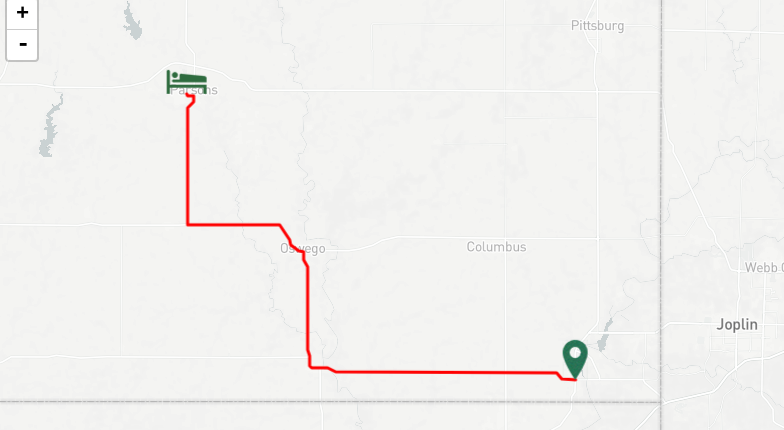
The state I wanted to examine for this assignment was Oklahoma. My mom is from a small town near Tulsa and I have been to visit many times. Oklahoma always surprised me because it is flat and dry but for some reason I found it beautiful and homey. I chose to do the one in the guide which took people from the Kansas state line to the city of Tulsa. Along the way I choose mainly all big cities and only two smaller stops. I found that many places in Oklahoma were once indian territories and so Indians either still lived around or the place was named based off the tribes. I found it interesting that the Airport in Tulsa used to be one of the busiest airports in the world. I never think people fly through Oklahoma so it surprised me. Another thing I found interesting was the Claremore stop. It was known for finding mineral water that healed people. I looked further into this and saw that there are now resorts there for healing people with the water. 

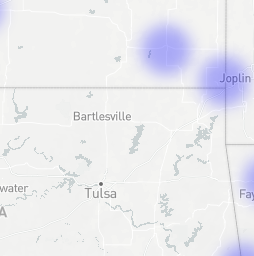
On the green book maps I typed in Baxter springs Kansas as my starting point and Tulsa Oklahoma as the end. I saw that there were no stops along the way that were considered “safe” stops. In the heat map view of the same location there was only some faint blue places but none on my path. I was not shocked to see this because I know that the south was more racist at the time.  I can really see now how “Digital mapping and database construction can allow us to reconstruct, preserve, and visualize vestiges of the past”. I knew the south was a hard place to live and travel for people of color but seeing it laid out on a map and knowing they would have to travel for thousands of miles with no safe place to stop is eye opening. I think seeing it mapped out like this can make a person understand it more. Comparing the Green Book maps to my first map , I can conclude that all of the neat tourism stops were only for white people. People of color would not get to safely experience any of these back then. I think this is interesting because the American Guide series were written to  “convey the “true” America to its people “ and I feel in a way it did but comparing the three different maps conveys more about true America then the single guide.

Bond, Sarah. Mapping Racism and Assessing the Success of Digital Humanities. October 2017, https://sarahemilybond.com/2017/10/20/mapping-racism-and-assessing-the-success-of-the-digital-humanities/

The American Guide Series: American Culture defined: The American Guide Series. Digital Exhibits. http://exhibits.usu.edu/exhibits/show/americanguideseries/americanguideseries

Mulligan, Shannon. Kansas line to Tulsa OK, November 2019. https://storymap.knightlab.com/edit/?id=kansas-line-to-tulsa-ok

Archive Reflection

In class this past week we explored interesting artifacts that George Mason has kept secure since the 1930s. In groups we were asked to examine notes written or typed in scripts from shows produced by the Federal Theatre Project. I found them extremely interesting because looking closely at handwritten notes by a director or member of the crew spoke volumes about the intentions of the production. For example, a group shared that their director took notes that the electricity stopped working during a production called Power. Another one shared the director made a notes that the actors needed to act more southern and another shared notes on how they were trying to get their production advertised but found some difficulties. All of these notes can make a reader understand the productions and society at the time better. Without saving these notes people would think all the plays went rather smoothly and the difficulties they faced wouldn’t be known. The information on the productions left by notes and kept safe is so important because it makes people understand the struggles the Federal Theatre Project faced. 

The archive collection at Mason is huge and although I was unable to attend the seminar I have a friend who works there and I was able to hear a little bit about what they store there, and how they store the information. 

I thought the reading and learning about digital archives was interesting because I always wondered how, why and to what purpose saving something digital could be as important as preserving something like a photograph.  In The Artifactual Elements of Born-Digital Records, Part 1 author Susan Manus touched on the changing technology. Looking back technology has changed immensely and being about to keep “antiquated carriers can also serve distinct roles in digital preservation activities” which is something I never thought about.Being able to look back onto something from one of the first computers would open up a whole new idea to you then just reading about it. 

In the interview between Thomas and Elvia, Elvia touches on her interest in archives and the topic of how people decide what is important enough to  preserve. In the interview it touches on how Elvia grew up bilingual in America and so she can relate to artifacts about cultures and is able to distinguish the useful ones. Also Elevia states that there are “ Issues of representation and power are fundamentally rooted in archival work “ and because of this people challenge archival neutrality. People in the archive work need to remain neutral in order to preserve important information. Elevia says she tries to “have conversations across similar fields with a diversity of practitioners is key to understanding how our practices and end goals are alike and dissimilar”.

Manus,Susan. The Artifactual Elements of Born- Digital Records, Part 1. (November, 2011). Library of Congress.

Padilla, Thomas. Elvia, P. Bias, Perception and Archival Praxis. (September 2013). Data Praxis

Charlie Smith

This assignment was incredibly interesting. I listened to an interview by a former enslaved man who’s original name was Mitchel Watkins. He was bought by a man named Jake and moved to Galveston Texas and where he states he was “treated me just like he treated his children“. I found this interesting because he had nothing bad to say about the man who raised him. He talked about how he was a cowboys and they would all shoot guns and wear boots and cowboy shirts. He seemed to fit in.

I was confused though, because Charlie also talked of the fight between the north and south which I assumed was the civil war. And that the African Americans bought Louisiana. Some of the things Charlie was stating did not make a lot of sense. He claimed to have received a letter from the Social Security at age 133. I was curious about Charlie because of these statements I heard in the interview and it says Charlie died at age 105 according to medics. He also claims to have helped Billy the Kid capture and kill the man who assassinated President Garfield and was paid by the United states $500.00. The timing of these would fit into his life span though. I did not look further into this but it is hard for me to believe. I also found that he never mentioned kids, a wife, his birthday or some of the basic information I feel like a person would state in an interview.

In the interview I could hear the interviewer doubt Charlies answers and also sometimes Charlie did not answer the questions fully or he would talk about something completely different. The interviewer also sometimes sounded rude in my opinion and this could be due to the fact Charlie did not speak as intelligent as the interviewer.

Given the claims Charlie made It was hard to believe anything he said. I know there is some truth to it all but I figure when he was interviewed he was starting to become senile.

https://cdn.knightlab.com/libs/timeline3/latest/embed/index.html?source=14E7PyfHHjOm2p0JZU6RvDw9FFgOU59SbJoWEdSD7EsM&font=Default&lang=en&initial_zoom=2&height=650

https://www.loc.gov/item/afc1975023_afs17510/

https://www.loc.gov/item/afc1975023_afs17510/

Algorithms and Feminism

I was not aware of the effect of inaccurate algorithms on society. Cathy O’Neil explains algorithms in her talk “The Truth About Algorithms”. She defines an algorithm as basically mathematical opinions and all that is needed for form them is a data set and a definition of success. Cathy makes an interesting point when she explains how her definition of a successful meal differs from her sons definition. Algorithms can be racist, sexist and bias and completely untrue. It is necessary to try to develop a way for these algorithms to be fair. People can lose their jobs, lose money and much more because of a faulty algorithm. Companies are now having the idea of being transparent in their algorithms. Basically so individuals can see how the algorithm is made and on what terms and bases. But in my opinion I don’t see how this is being completely fair. People can now see what they were judged on but also is that judgement is still coming from an opinion? I am open to the idea and I understand how being transparent is better than being left in the dark.

In the 1930s and into the 1940s women were just starting to emerge as workers. The American Yawp explains how during this time women began to take roles in office and Eleanor Roosevelt was a strong first lady who took charge and strived for change. Although even with the few successes of women in office the New Deal programs were essentially built for men. The spark for change was lit in the 1930s and has continued to burn ever since. Women are still fighting for equal rights and I believe will continue until successful. Pay differences in the workplace is one of the main changes I hear about still. 

1939 Art Exhibit and Glitching

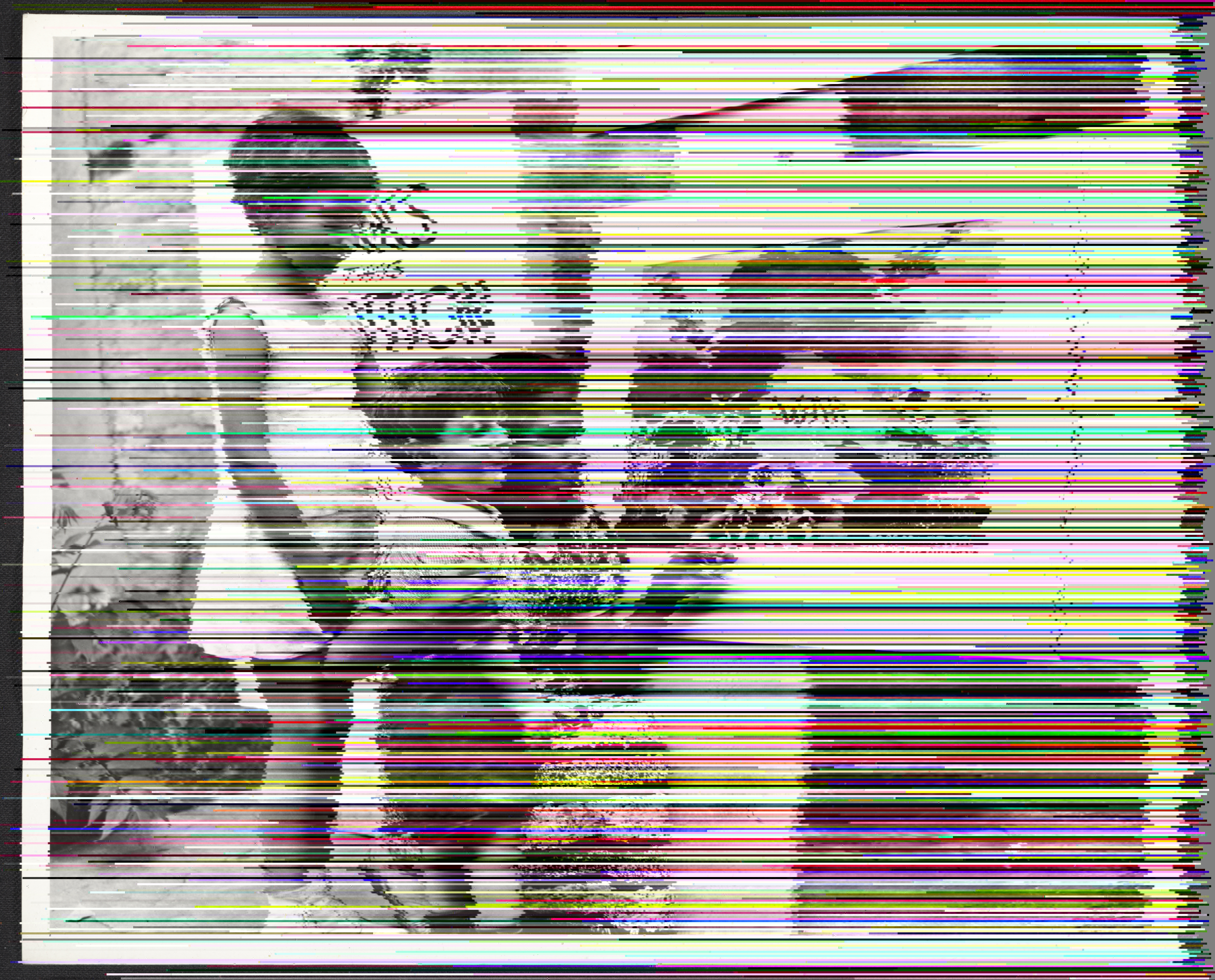
The image I selected for this assignment stood out to me in many ways. There are innocent and young children staring at a cartoon painting of war. The contrast between innocence and darkness is what stood out to me and made me decide to do my assignment on this particular photograph. 

This photograph was taken in 1939 and at an art exhibit that was being funded by the Federal Arts Project. The arts were something that was used in order to lift the spirits of many Americans during the great depression. World War II broke out in 1939 and to see a painting of cartoon war being placed in a children’s art exhibit was interesting. The kids faces in the photograph don’t look upset but actually happy. I’m unsure if they know what war exactly entails but I wonder, were people happy about going to war? Was it something to focus on instead of the depression?


The glitched version of the original image is interesting because it takes the harshness out of the painting of war. Adding the color back into the image makes the innocence of the children come through and the word “war” is barely visible. Being able to glitch the image is an example of how we can manipulate it. This makes us able to “… pivot and change our perspective on it. Doing so can help us see things differently”. This image turns more cartoon like instead of serious which I think takes away from the meaning of the piece. I think the author Sol Horn was intending to have the contrast between kids and war stand out.

This may be a far fetched idea but when looking at both the original image and glitched image the one feeling I do not feel was intended was panic. Panic was one of the reasons the country fell into the Great Depression and my thought is that maybe the idea of having the painting in a cartoon format and around kids is to make it not seem as serious. By desensitizing people to the idea of war might cause Americans not to go into a panic again.

Archives of American Art – Children’s art exhibition sponsored by the Federal Art Project – 12271.jpg. (2018, March 25). Wikimedia Commons, the free media repository. Retrieved 14:49, October 9, 2019 from https://commons.wikimedia.org/w/index.php?title=File:Archives_of_American_Art_-_Children%27s_art_exhibition_sponsored_by_the_Federal_Art_Project_-_12271.jpg&oldid=293691781.

http://jessicadoeshistory.com/cnd/items/show/18

http://jessicadoeshistory.com/cnd/exhibits/show/shannon-mulligan–children-s-a

Digitization of Information

Tony Guidone gave a great informative presentation on digitization and keyword searches. Before this presentation I had never thought about how digitizing an artifact can make a difference in the way we interpret a scenario. For example newspapers that have been digitized. Not every newspaper that has been published online. When looking back at a certain time period, this has to be accounted for. 3. Tony made a great point when asking the class “ did the Toronto Star deserve to be cited?”. It brought up the topic of availability. This doesn’t mean that the paper is the best source of information but rather it is the source that is most easily available. 

One of the ways text searching has changed the way we engage in information is that it speeds up the process. If we are looking for information on a specific topic, person or date we can quickly find it rather then reading through pages of information. I think word searching can also cause a negative outcome in research if not done correctly. Before conducting a word search I think an individual must be familiar with the language of the time period and understand context surrounding a person or thing. These two factors play a huge role in relaying information correctly.

Although artifacts online are great because they are easily accessible there is a downfall in them. Digital artifacts can lose original meanings conveyed by touch. For example in Tony’s presentation he passed out two coins. One coin was made from a heavier and thicker material than the other. This shows that the older coins were made better as opposed to the newer ones which felt more cheap. This element would be lost if there was only a picture of the coin online. 

I think digital projects have the ability to make significant social change. Everything these days is online. Newspapers and magazines are sold as much and billboards don’t generate enough attention like they used to. Digital products are the new way to relay information. Social movements in a digital project would generate more of a response and effect than anything else.

Milligan, I. (2013). Illusionary Order: Online Databases, Optical Character Recognition, and Canadian History, 1997–2010. The Canadian Historical Review 94(4), 540-569. University of Toronto Press. Retrieved September 16, 2019

Blog post #1

I have been familiar with aspects of the 1930’s to the since highschool. I was taught about the stock market crash which brought about the Great Depression. Many people during this time were unemployed, broke and living in hoovervilles.We saw a picture in class where a man was selling his car for $100.00 which really makes you realize that these individuals were struggling to make it through. What I learned and found interesting was the technology that was emerging during this time period. In class last week we learned that there was a shift happening from computing with emphasis on humanities to humanity that are in digital form. One of the inventions during this time was the punch card which became the official computing device for the New Deal.

The project that I was assigned to analyze was the  Archive for Virtual Harlem by Jessica Johnston. Johnston researched and found influential artists, poets and musicians that were apart of the Harlem renaissance. The Harlem Renaissance was a time where “African Americans wanted to express themselves freely” and so there was a “ cultural, social and artistic explosion”. The main page of the website explains Johnstons idea that by making a virtual Harlem where individuals can experience sounds and art through interactive modules, one can understand more of the culture than if they were reading about it in a book. On the left side of the website there are different links that are clumped together with artists, poets and musicians. When clicking them they will take you through the individuals bio, some of their work and their influence in Harlem. The way this is set up makes the process easy to explore. There is also a bibliography at the end with tons of credible sources which makes this archive that much more reliable. The way this archive is set up makes one understand just how influential and important the Harlem Renaissance was. The talent that was brought up and expressed because of this time period really paved the way for the future of African American culture in the United States. 

Johnstone, Jessica.An Archive for Virtual Harlem. Retrieved from   http://scalar.usc.edu/works/harlem-renaissance/title-page

Miriam, Posner. (2014, February 1). How did they make that?.Retrieved from http://miriamposner.com/blog/how-did-they-make-that/

css.php