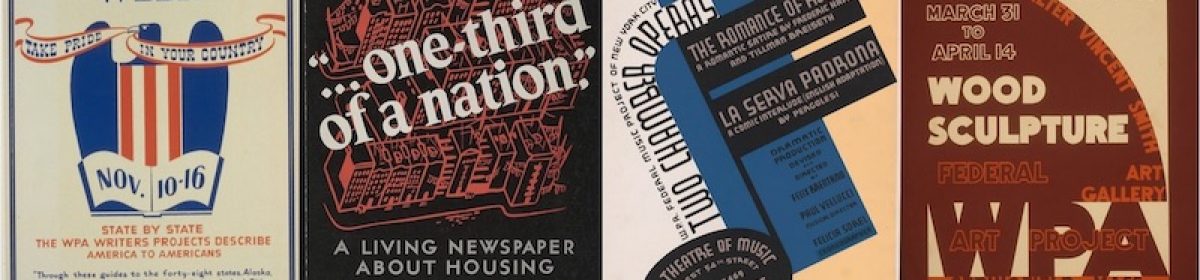
On November 6th, 2019 the class met in the Fenwick Library to talk about the things Mason has archived. It was actually a pretty fascinating topic. My group looked at the “Revolt of the beavers” play, it was later discarded because beavers sharing somehow leads to children believing in communism. Besides that, it was interesting to see something that was supposed to be erased time, because of it leading to communism, was still somehow saved.
Archivists are the people who preserve these types of things so that other people can later find them. One huge part of their jobs is to take things and preserve them to the best of their ability so that later when someone needs that artifact for a paper, presentation, etc they can use it towards their work. No matter if they actually want the artifact or not (the donor situation), if the artifact will be valuable or not, or the stance it supports on politics, gender, race, etc. these people preserve them. Each artifact they preserve is like a time capsule in our history – for instance, The Ballad of America. Once that song was connected to communism the writer was blacklisted (for other songs aswell), and the song was ripped out of every schoolbook. The government wanted it to be completely hidden. Now in later times since it was well preserved, and we can look back on it as a big part of our history. 1
These Archivists have to: Identify the artifact, determine if it is worth preserving (if a donor offers lots of money, the item is really valuable, if it’s on a topic well known throughout the school, etc). Next they have to decide how they are going to preserve it. That might be keeping it in their storage/library, making the item available online, putting it in a display, etc. Then preserve that item and make it available to the general public. These types of things, in a way, serve as a memory of the United states. Although over time somethings may seem little or pointless its sort of a way of saying “Hey I was a thing that existed, you can’t just forget about me”. 2
Another tough job Archivists have is determining if to make something digitally available online or not. Majority of the time the papers they have are stored in a library, which they want people to come to. The whole point of a library is for people to come, check out a book, do some research, and check out these documents/artifacts. One of the plus sides of putting the documents online is its more accessible to more people, but as I said before that might make less people come to the library. Another plus side to putting it online is if the document is in really bad shape it might be better for people not to come and touch it. This digitally preserves it. 3
I’ve never been interested in theater, but to be able to see a play that was supposed to be destroyed years ago and be able to hold the original in my hands was fascinating. To look back on the past it makes no sense to us that these things would want to be destroyed and hidden from us. Back during those times everything was rocky, everyone was always looking behind their back with things like the depression happening, WW2 on the brinks, just anything bad you can think of. People needed ways to unite but those things uniting them were being taken over the people “looking behind their backs” and being scared. I’m glad that back then even though everyone might be scared of it, someone still realized these things needed to be saved as a “time stamp” in our history.
- Sparpiro, Ben. “Ballad for Americans.” Radio Diaries, 5 Nov. 2018, http://www.radiodiaries.org/ballad-for-americans/.
- “The Societal Role of Archives • CLIR.” CLIR, https://www.clir.org/pubs/reports/pub89/role/.
- Manus, Susan. “The Artifactual Elements of Born-Digital Records, Part 1.” The Artifactual Elements of Born-Digital Records, Part 1 | The Signal, 28 Nov. 2011, https://blogs.loc.gov/thesignal/2011/11/the-artifactual-elements-of-born-digital-records-part-1/.
