The Message of the New Deal in DC: Then and Now

The New Deal has had a lasting impact in so many ways around Washington D.C. Many of its buildings and artwork is a direct result of the New Deal. However, just because the impact of the New Deal is long lasting does not mean that its message has been preserved. In D.C. today it is very likely that most of the sites that are products of the New Deal are still physically in tact. This does not extend to the ideological preservation. While they have not been destroyed. But merely that the message the original sites held has been pushed away, hidden, or in some small cases removed.

The notion that one can use mapping projects to show the success of something or the message of something is talked about in a piece by Sarah Bond 1. The piece shows an example of racism as core idea to map. With the sites of the New Deal in Washington D.C. one can largely do the same thing. This is especially apparent with what is discussed as the “success” of something. In the article the success of Digital Humanities is discussed. In the Capital, however, one can discuss the success of the message of New Deal Sites using mapping. This is because in D.C. many of the surrounding area is largely the similarly preserved as the site itself. Two of the best kept sites are the West Wing and the Lockkeeper’s House. One can look at the surrounding area, in this case the Federal Triangle, and it is clear there will be a high level of preservation. The buildings being such well preserved structures, some also products of the New Deal, indicate through mapping that areas around them will also be well preserved. This is also equivalent inversely, one example is the Recorder of Deeds building. Many of the buildings around the Old ROC building have been destroyed. So, following the map trend, the ROC building and the message have also been altered or partially destroyed.

Time can also have a great effect on the the sites themselves. Using timelines one can see, visually and ideologically, how the sites have changed. The Old Post Office building which once brought the Nation together is now seen by many as a symbol of corporate greed. It is now largely rented out by the Trump Organization which has caused some bias in the original buildings preservation. It is incredibly important to be aware of this archival bias that is present in Museums 2. One must understand that due to the Hotel that was built, this has pushed the message of the post office away. This is meanly why a timeline comparison was chosen for sites such as this one. One can use it to both compare the old message and the new bias for or against the original message.

The Depression hit many people but due to rampant racism, it hit African Americans much harder 3. Due to this many artists of the time would express this in the murals and paintings. The murals in the ROC Building were created to represent the various important African American political figures that worked there. This in many ways is how art was used throughout the 1930’s 4. It was an expression of the reality around them and a also an escape.

The Legacies of the New Deal have extended far into the modern age. However, many of the messages have been lost or are hard to find. Through research, the many sites that once held great historical significance have been changed drastically. This has thus destroyed much of the effects that could have happened because of the New Deal. Despite this, the New Deal’s long lasting effects have had a more subtle impact today. Even though physical monuments have been changed, the ideas that were created live on in those who believe in the original messages.

REALLY IMPORTANT

There seems to be a limitation with what Omeka can do with annotated images. It seems to destroy other parts of the page if there is other content. It will also simply not show anything if it is alone. However, this only happens if you are not logged in to omeka. So, you should not have a problem with this but I am not the only one that had this happen. Secondly, if this does in some way effect the project I have attached to the site a “Part 2” which is me analyzing the images but by not using the annotating tool. Please you this if the if there are no image annotations on the other page. Thank you. gg

Also if you paste it as plain text it may also work normally.

Image Analysis

The Core of the Hispanic Community through Music

The Hispanic community makes up the second largest demographic in the United States

5

. The community makes up significant cultural and economic influence not only on society but on politics as well. The US is often described using the “Melting Pot” analogy which shows the large number of different cultures. So, the fact that there is a large Hispanic community is not at all surprising. However, this was not always the case in the US. At some point this vast amount of people needed to leave somewhere and immigrate into the US. Most of this happened during the 19th century but the base for the cultural fusion we have today can be traced back to the 1930’s. Many of the “classic” Hispanic signs, art, and music was first documented in the 1930’s. Using this documentation of music one can see why much of what is considered Hispanic today exists.

When talking about the effect and power of music Alan Lomax describes it perfectly as something that “honors the traditions of all people and enriches us as individuals”

6

. Alan Lomax was talking about The Global Jukebox, a website that preserves music in order to enrich later generations. The Hispanic music of the 1930’s can do exactly what the Global Jukebox sets out to do. In the Hispanic community, Religion is a very well-known staple with Catholicism being its biggest. This is represented in its music today and in the 1930’s. Jesus and religion being such a central figure in songs listen 7 shows its impact on the Hispanic Community. Like many other Hispanic songs from the 1930’s they have a religious aspect as their center point. This goes back to the core idea of the Hispanic culture in the US starting in the 1930’s. The music that is preserved helps show in what ways the developing Hispanic community expressed itself. The songs were made in order to bring together people from vastly different countries with two of the things they had in common: language and religion.

Often time the Hispanic people migrating moved through very distant lands in order to get to the US or even places of work. As mentioned before the Hispanic people were from vastly different places only really connected by their language. An Argentine could have incredibly different beliefs than a Venezuelan. The songs of this era also needed to bring people together in the US. The American Ballad being a primary example of this. Many parts of the Us were highly disconnected and a song that united all the places under one sound is incredible 8. In many ways for Hispanics the places they have gone through to get to the US unites them. Crossing rivers, hills, and mountains listen 9 in order to find jobs is common ground among many of its Hispanic listeners.

The Hispanic community being such a large part of the US can be traced all the way back to the 19th century. But, it was not until the 1930’s that its true culture began to take shape. Today we can analyze much of it using preserved songs in the Library of Congress. They show some of the common ground that was found during the time of migration and job search in the 1930’s. Also with religion being a such a staple in the community, the songs reflect this idea. In the future, as more songs are analyzed and songs from today are easily preserved the future generations will be able to see our culture through music.

How Mapping Shows What is Lost and What is Gained

The tours that were created in the American Guide Series were meant to help Americans “rediscover America.” I helped people from the 1930’s not only navigate the US but also learn much about its history, folk lore, and culture. However, due to this being in the middle of the Great Depression there was also a hope for this guide; to help reinvigorate some Americans. It was going to show the very best of America, and in doing so put some hope and pride in the Americans that lived there. This did have the side effect of ignoring some important aspects. While the American Guide Series did work in providing Americans with a tour of culture in the US it failed to accommodate and show what many people where actually going through.

One of the biggest aspects that was completely ignored was the accommodation for the colored people of the time. This period was really only in the early stages of the Long Civil Rights Movement (LCRM)

10

. Thus, many of what would change in the future simply had not happened yet. Many places and people in both the South and the North did not have anything to allow colored people to tour. Furthermore, this was something that was discovered when using the Mapping Project. When using the “Navigating the Green Book” tool I tried to find something that overlapped my current map of the American Guide Tour. This could not be done as there were no routes that overlapped my mapped tour. This is further demonstrated in the picture below.

Map Overlap

The image shows two maps overlapped. One with green dots shows accommodations for colored people while the other shows my personal mapped tour. As you can see it is not a matter of how people would have experienced it differently. It’s that colored people would not have gotten to experience it at all. The tour that I had chosen from the New York Guide gave a route that showed amazing history of the area and other cultural phenomena. But due to the period, men and women of color would not be able to do what other people could.

               When actually looking at the mapping of the New York tour, I noticed a fundamental difference between how the Guide portrayed the US. The guide would often label things with picturesque description. Using things that many could view as inspiring or beautiful. This was completely by design when creating the series. Going back to what was discussed about the American Guide, one must remember why it was made. It was meant to help showcase the “ “true” America to its people” 11. This of course was sacrificing the representation of what Americans were feeling at the time. This is especially poignant when comparing many of the routes to the thousands who migrated west for work. These guides needed to try and give hope to American and if it had shown the unemployment and the desperation that was the migration in the west it would have had the opposite effect. My personal mapping tour showed many luxurious places filled with mansions or economic success. This was in stark contrast to what was being felt but was none the less necessary.

            With this mapping project one can begin to understand what was being done to help the overall feeling of the depression; while also showing how people truly felt. This idea is best shown in the comparison image. The lack accommodation shows how there was still a very long way to go in terms of civil rights. With the American Guide and its wording throughout the mapping shows how the FWP was trying to reinvigorate the American People. Mapping gives these opportunities by showing physical primary sources that can be traced throughout history.

Mapped Tour: https://uploads.knightlab.com/storymapjs/be6a50a50d5982225a5712534d8d24ad/placeholder/index.html

Archived Preservation: How it changes the way we see history

Apple data. This is but one example of how scholars could use archived material. The main point being that archived and preserved items can be used to analyze things from that time period Archives in general are useful in many regards. However, the way they are useful can vary from group to group. For both scholars and the public, archives offer a glimpse into history by physical manifestations of that history. This can be through actual documents being preserved or other more three-dimensional objects such as dioramas for example. As discussed in Susan Manus’ article

12

one of the major uses for scholars is to actually use archived equipment for certain purposes. Preservationists can use things like older computer systems to analyze and recover some of the out-of-date storage equipment that has simply gone out of use. An example could be using an old Macintosh system to recover old original without needing to be in that time period.

            When regarding how the public interacts and uses archived material there are some limitations to think about. One of these limitations can come from not having physical access to some of the items. Most of the time a regular person is unable to actually go a physically analyze these objects. This is one of the biggest reasons and benefits of digitization; it allows for anyone with WIFI access to view these pieces. Another limitation, which scholars face as well, is the necessity for a lot of items to be digitized. The way many of the items in collections are selected for digitization can also be an extension of this limitation. When selecting some items to be digitized, it is discussed with Thomas Padilla and Elvia Arroyo-Ramirez

13

that some of the original meanings of the items may be lost or altered. An example discussed was how an item which predated the internet was digitized without consent from those who it was meant for. This “blanket tendency” as it was called to do this can be harmful as it can leave out specific knowledge regarding the item; in this case being that it was meant for a specific group of people.

            Analyzing the items that we had in class gave a richer understanding of what the FTP was. One of the first things that I simply had not picked up on with digitized documents was that it was so much more nationwide than I previously thought. There were documents from the FTP in New York, Chicago, and other locations. While I new that it had taken place in multiple cities and venues, having physical evidence in front of you makes everything feel more real. When looking at digitized items you are fundamentally losing the realness and the physicality of that object. Holding a flier for a Macbeth show in Chicago is so much more interesting than looking at it on a screen. You can see how big it is, how it feels, the imperfections on it. All of this added so much more physical context to many of the programs we had been studying throughout this semester.

The Lack of Republican Party Criticism

When beginning, my question was this: “What were the major criticisms of the FWP from the Republican side?” This, seemingly at the time, was a good question to ask. It is always interesting to ask, “well what are the counter argumetns to this?” However, I quickly came to realize that while there were going to be detractors and flaws to a government program as always. They may not be coming from the conservatives or Republican Party of the time. I had made a lapse in my knowledge and had forgotten that the Republican Party at the time had actually been going through a switch, much like the Democrat party. This error came when trying to do research for this in Voyant. Overtime I simply could not find anything that had to do with any criticism from the Republican Party.

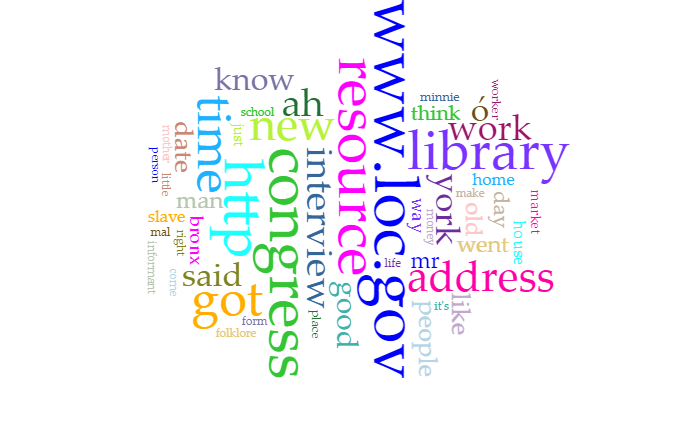
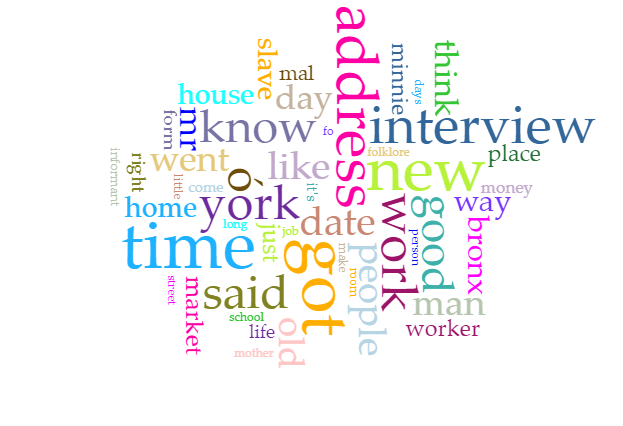
At first in trying to find some form of criticism I first tried to limit the words that were used using the “stopwords” tool in order to narrow the search. However, ultimately my search came up with nothing. Some of the words that I black listed are what one might expect. As shown in the “before-after” image many of the original words in the first corpus needed to black listed as they were simply not useful or were redundant.

Before
After

It must also be noted that when selecting the sources, I specifically choose sources that had an inherent problem. Sources that perhaps described something going wrong or something negatively. I believed that in these sources there could have been someone who was a supporter of the Republican Party and thus could have stated some negative opinion in the programs. The first 10 sources that I submitted did not “work.” Meaning that I initially thought the reason I was unable to find any Republican criticism was due to my 10 simply not having any. As a result, I created a “Final Corpus” which used some from the original ten that had negative insight and some new ones that I had not previously been exposed to.

In end, I used a distant reading method to first find some criticism on programs 14. Then, I moved into a close reading method in order to analyze that source. However, while there was some criticism in the source there was nothing to indicate it was coming from a republican ideology. Despite not finding something relating to the question I posed, without the tools of black/white listing it is likely I would not have been able to find any criticism. Due to the size of the corpus close reading would not truly bring good analysis on these sources while using close reading would not be feasible. So, by using the Voyant Tools as an in-between (to close and distant reading) I reached a goal of finding some criticism.

As I was getting ready to revise my original question in favor of a new one, I began to understand why there was no Republican criticism. The party had actually began to switch its sides just as the Democrats did. I had actually previously known about this switch but had mistakenly thought it had occurred quickly after the civil war

15

. With this, by complete accident, I had uncovered something quite interesting. Perhaps the reason that I could not find much information on the Republican Party criticism was simply because there wasn’t any, at least not in this. The reason for this being is that maybe the Republican party may not have actually truly disagreed with what the Democrats were doing 16. Of course, there will always be disagreement simply for the sake of disagreement between political parties. But, due to there being little to zero Republican criticisms in these documents shows that they might not have %100 disagreed with what F.D.R was doing.

Without the Voyant Tools, none of this understanding would be possible. Distant reading was far to broad and close reading was too specific. Voyant tools helped me find an in-between point where I could both look at all the documents I had selected and analyze them.

Blog Post #4: The Connections Between Modern Algorithms and The Social Security Act

As this was a very early time for civil rights the Long Civil Rights Movement is a movement brought up in Jennifer Lynn Ritterhouse’s book Discovering the South: One Man’s Travels Through a Changing America in the 1930s 17 that states that while the civil rights movement was at its peak in the 1960s the LCRM can be considered a sort of pre curser to that. What the LCRM did was simply layout the foundation for what was considered the height of the civil rights as well as modern civil rights movements. During the 1930s there was a push for a cultural lift in the United States spear headed by people like Harry Hopkins as well as The New Deal on FDR’s part. However, as discussed in The Living New Deal’s Working Together 18 the New Deal failed to address the hardships of minorities in during the Depression Era and in some ways even heightened the hardships. Therefore, movements like The Popular Front and the LCRM are mostly credited with the advancement of civil rights during the 1930’s. There simply weren’t many things that the U.S. Government was doing for the advancement of minorities. People like W.E.B De Bu Bois, Jane Adams and Marcus Garvey are essentially the first step of the 1960s civil rights explosion and that of modern times. Some contributions such as the books and papers that were written or physical organizations like the NAACP are still at the forefront of civil rights. Also, while they may not have lasted as long, things like Jane Adams’ Hull House 19 were at the time some of the best advancements for class injustice as well as other civil rights issues. With these movements and organizations, the central idea was for basic racial, class, and many other forms of equality. Also, as discussed in The American Yawp

20

the central message was to give the people clearly being discriminated against some form of control in their government. The example given in the book states that even though the heavily African American community of agricultural workers still had to pay taxes they would not receive the benefits of the Social Security Act. The reason for this being that “…(white southern lawmakers were) afraid that economic security would allow black southerners to escape the cycle of poverty that kept them tied to the land as cheap, exploitable farm laborers…” 21. This clearly was wrong and many of the civil rights leaders of the time vouched for some representation as many white southern lawmakers only advocated for discrimination.

In many ways this has not changed today with other issues that are at the forefront of politics. The way that many people saw the treatment of African Americans in the 1930s specifically regarding the Social Security Act is largely the same when regarding biased and unfair algorithms today. Much like the little control the African Americans had over their right to social security many today argue that there is too little understanding of what happens inside of an algorithm. This, much like the little representation in social security, results in zero control over large part of the algorithm

22

. Overall while people think that algorithms are something that is unbiased it has been shown that many can give unintentional bias or even intentional. It has been exposed that many of the algorithms that can decide very crucial things in people’s lives are unreachable in how they are made. This results in people not actually knowing how or why they were denied insurance, for example 23. One example that has recently plagued many early detection police algorithms has to do with African American crime rate. Obviously African American are not more likely to commit murder. However, due to the statistic of African Americans making up 13% of the population while making up 50% of all homicides in the United States many algorithms have mistakenly understood this as “African American are more likely to commit crim.” Clearly this is not the case, this is a biased and bigoted thought but because the algorithm only sees the statistic it has been known to sort of “let go” of other races. This clearly is a problem and many situations like this is what has caused many activists to call for access to these crucial algorithms. The lack of access and thus lack of control has proven to be a problem time and time again and thus needs to be addressed in the future.

Extra Credit: How Social and Economic Problems are Tackled Head On

While there was a great amount of escapism throughout the 1930s, this has been drastically changed since then into a culture where we dive face-first into social problems. This is exemplified today by the social and cultural trends that are used and shared by people today. Throughout the 1930s there have been many examples of movies and other art forms that show there was a very deep-rooted ideal of escapism. This in some ways is actually quite understandable, FDR even wanted to try and re-instill the Hope in American society. With so much of the economic sector as well as a cultural sector collapsing it is easy to see why many people turned into a form of escapism and treating it as a thing to cope with their problems. One such example of this was the movie It Happened One Night by Frank Capra. While there are many examples throughout the movie one example is while he is in bed dreaming of a better life on an island to which he can escape and live with a woman he had once scene. Many people dreamed of this but very few would ever actually attain it, that was the whole point it was never really meant to be attained just as a simple coping mechanism for those suffering in the Depression era. However, this is in complete contrast with modern trends. While the presentation of problems is still in many forms of popular culture such as movies, videos and other forms of entertainment, it is only to try and challenge and face these problems head-on. Movies and entertainment painted a picture of perfect places where people would escape to in the Depression era, today they paint pictures of imperfect worlds and even try and help contribute to fixing the problem. One example is diversity and representation in entertainment, with movies like The Avengers as well as video games like Overwatch directly helping combat this problem. Other forms of media that do not hide the problem are things like Twitter which many even use as a platform to express their views and beliefs as well as ways to fix problems. Finally there even movies like The Joker which is rumored to help expose class injustice in modern society. While the world’s problems in the Depression era were never really hidden it was always ideal to try and escape them; however now, culture has chosen to directly push back on these issues to fix them.

Clips from modern movies and entertainment that clearly show the presentation of modern problems:

Diversity:

Female Representation:

Escapism in It Happened One Night:

Blog Post #3: WWII Propaganda can Show The Lessons of the 1930’s

In order to connect these images with the 1930s and Depression era one must look at what was going on in the countries during that time. this image was taken during World War II and US during the 1940s how were they call back to a time in which U.S. as well as Germany was in a time of hardship. While Germany and somewhat Japan chose to blame minorities culminating in things like the “night of broken glass” and the “night of Long Knives” the United States chose to not only foster community through artwork as well as culture but also some people chose to address racist issues in the United States. This is the exact lesson that the United States learned from the Depression era; in order for Progress to be made one must unify the country and not split it like the Nazis did in their country as well as the Axis powers. the propaganda shown in the image heightens this assertion, the propaganda shown on the US side is clear meant to instill hope and come together. Also, while it is not shown directly, Nazi propaganda is notorious for being a racist and open to degrading other people and minorities in order for that to foster community. However, as it was somewhat shown by the glitched image, it is clear at this propaganda does not work. Overtime the Nazi’s and the Japanese failed at creating a community and thus lost the war. They pushed away people and from this they could never truly recover.

When selecting this image it was important to remember that this was not taken during the 1930s; however, that does not mean that it cannot be connected to the 1930s. The image needed to be something that connected back to the Depression era as well as showed change that had been a direct result from that time. This image is perfect as it exemplifies what the United States Information Office had learned from the propaganda and programs of the 1930s. it is clear that FDR’s goal during the 1930s was to foster a community with increase in culture and economic programs. This same sense of community was used in World War II propaganda against Nazis due to the fact that axis propaganda routinely separated people. In order to counter this United States war information office used that same message of coming together against the Axis Powers. If many of the programs and the culture of the 1930s had not happened these types of propaganda would not exist.

As stated before this image was not created in the 1930s, thus naturally one of the biggest questions was how can this be connected back to the depression-era? This also went into other questions: what from the 1930s influence this picture and how, if it had not happened, would it have changed? That is to say if the culture and the lessons of the 1930s had not happened what parts of this image would be different? Furthermore, because of the lessons and effects of the 1930s into this image, what resulted from that? Finally, what effects of the digitization of this image are apparent today? Many of these can be answered by looking at the result of the war and the propaganda. In doing this you will see what worked and what did not work. When finally answering what resulted in today’s world from these images one can see unifying ideas still being present today.

One method that was highly engaging and useful was that of the corrupting and glitching process. While I was a skeptic at first, after glitching the image many of the ideas talked about in the annotations would not have been possible without the process. The idea that one side of propaganda had worked and one other side did not came directly as a result from the glitching of the image. Also when annotating the image it is very helpful to not only focus on single parts of the image but what they mean. when looking at an image of a whole it is very easy to slip into looking at at an idea that is too large. by focusing in and honing in on ideas within the image one can peel back the layers and truly understand what the message is.

By using these methods the questions posed are honed in on much like parts of the image. As stated before one of the issues when analyzing images is one tends to focus on too big of an idea. However, using things like glitching allows the person to in some cases cover up unimportant parts of the images or created new images with a new ideas. these new ideas can sometimes allow the person hear it from a different angle and us have a better picture overall. finally with this information one can try and answer some of the questions that may have seemed difficult or abstract. Most of the time they are really not extract you must simply look at it from a different angle and these methods help in doing so.

Links to Items and Exhibits:

Exhibit: http://jessicadoeshistory.com/cnd/exhibits/show/americancounterpropagandaimage/americancounterpropagandaimage

Item: http://jessicadoeshistory.com/cnd/items/show/168

Citation:

Holocaust Encyclopedia “Nazi Propaganda” (2019) United States
Holocaust Memorial Museum Retrieved: https://encyclopedia.ushmm.org/content/en/article/nazi-propaganda

Jewish Virtual Library “The Nazi Party: The Night of Long Knives”
(2019) Jewish Virtual Library: A Project of Aice Retrieved: https://www.jewishvirtuallibrary.org/the-night-of-the-long-knives

Madison Horne “These World War II Propaganda Posters Rallied the Home
Front” (March 13, 2019) History.com Retrieved: https://www.history.com/news/world-war-ii-propaganda-posters-photos-united-states-home-front

Micheal Berebaum “Kristellnacht | German History” (2019)
Encyclopedia Britannica Retrieved: https://www.britannica.com/event/Kristallnacht


Blog Post #2: Keyword Mapping: What is lost and what is gained

While many researchers may or may not change the data and information that is gathered overtime, the way that the it is viewed has become drastically different. Throughout history, and with the rise of digitization of information, a simple keyword search can save hundreds of hours of sifting through documents looking for that one single piece of information that you need. This new way to view information has made the researching process overall much easier. As stated before, there was a time even before index cards which found people needing to simply look through years of data that to them could have been just meaningless jargon. Up until they find that single piece of info that was needed for their research. Simply put, researching has become far more efficient that what it used to be. That is not to say that it wasn’t good before it just has grown to another level with keyword searching. This also greatly extends to the world of academics, especially now in which we are in the final transition of digitization. There are still students (most likely late in college) who may still remember pulling out encyclopedias from their home shelves in order to find out about a certain topic. However, some younger students don’t even know that the word encyclopedia didn’t originate from Wikipedia. With keyword searches old school research is becoming simply too slow and inefficient compared to new methods. With the rise of digitization also comes the rise of digital project, these being online experiences meant to enrich the user and/or researcher in that topic. These most definitely can cause social change as they can do something unique; combine primary sources and secondary sources to put the user into the what they are trying to convey. Looking back at the project I was assigned, Harlem: 1915-1930 24, it was obvious the amount of time was dedicated to putting together a useful interface that allowed the user to explore that time in history. Also, by using the combination of both types of sources, the project was able to put me into whatever moment in those years I wanted. This level of immersion can truly only ever come from digital projects. However, that is not to say that something isn’t lost when doing these types of projects. While they can show you primary sources as well as secondary sources, there is nothing like doing research with the actual source in front of you. Digital projects give you a unique experience however so do museums, archaeology, and other firsthand types of research. Anyone can do a simple word search, but it takes some real digging to go and find something that was never mapped out and digitized. That is the fundamental thing that is lost when using digital means; you can never truly find your own path, only one that has already been mapped. Sources: Digital Harlem “Digital Harlem: 1915-1930” (2017) Australian Government|Australian Research Counsel, Sydney University Retrieved: http://digitalharlem.org/ History.com Editors “Harlem Renaissance” Ian Milligan “Illusionary Order: Online Databases, Optical Character Recognition, and Canadian History, 1997–2010” (2013) The Canadian Historical Review Retrieved: https://muse.jhu.edu/article/527016 Library of Congress “About Keyword Search” (2019) United States Government Retrieved: https://catalog.loc.gov/vwebv/ui/en_US/htdocs/help/searchKeyword.html Tony Guidone “Digital History Presentation” (2019)

Blog Post #1

As classes began last week, I was able to gain a better understanding of not only what is expected of me during the class but also some basic information regarding the shift in technology (and in some ways thought) from the starting point of the New Deal 1930’s to our modern time. Overall, the discussion was centered on the shift from the New Deal culture and technology to that of future years and generations. One example of those was regarding technology during the late 20th century; it was discussed how rapidly technology changed from the simplistic style of some video games such as Myst which ran on very early framework (Hypercard) to what is running now on modern computers. This also showed the cultural shift during this time, as video games became more and more complex the subject matter of those video games grew as well. This also was seen in the development of the internet itself; the more complex the internet became from a simple idea (Hypertext) to something that users can interact with and change at their own free will. This alongside the development of graphical user interface further pushed this idea of users being able to control their computers (personal computers such as Macintosh).

It will also be interesting to see and try to understand History through modern technology. In most modern classrooms History is taught using primary sources or secondary sources. With this class (as well as with the project) it is apparent that we are now able to somewhat combine both types of sources to gain a much better understanding of what is being studied.

The project I was assigned was Digital Harlem: Everyday Life 1915-1930. This project is an interactive, virtual database of news papers and official legal records from that time and place. The project focusing on the Harlem Renaissance, due to it being such a significant moment for African American history, is able to connect what is most commonly studied in regard to its prominent cultural icons with its everyday life and people; “Unlike most studies of Harlem in the early twentieth century, this project focuses not on black artists and the black middle class, but on the lives of ordinary African New Yorkers.” As stated, this distinction allows the project to much more human while also using modern technology to investigate the past, much like this class will. Also, while it will purposely focus on the everyday lives of African Americans in Harlem it will also show prominent figures that shaped the Harlem Renaissance. This can be referenced in the Nightlife tab where music and culture of the times was on prominent display. The actual website was made to be incredibly interactive, which in turn gives the user a much greater since immersion. Giving users actual records and a sort of flow of the timeline is unique to something like this.

Sources:

Biography.org Editors “Bessie Smith Biography” (2019) The Biography.com website Retrieved: https://www.biography.com/musician/bessie-smith

Digital Harlem “Digital Harlem: 1915-1930” (2017) Australian Government|Australian Research Counsel, Sydney University Retrieved: http://digitalharlem.org/ History.com Editors “Harlem Renaissance”

HISTORY (2019) A&E Television Networks Retrieved: https://www.history.com/topics/roaring-twenties/harlem-renaissance

css.php