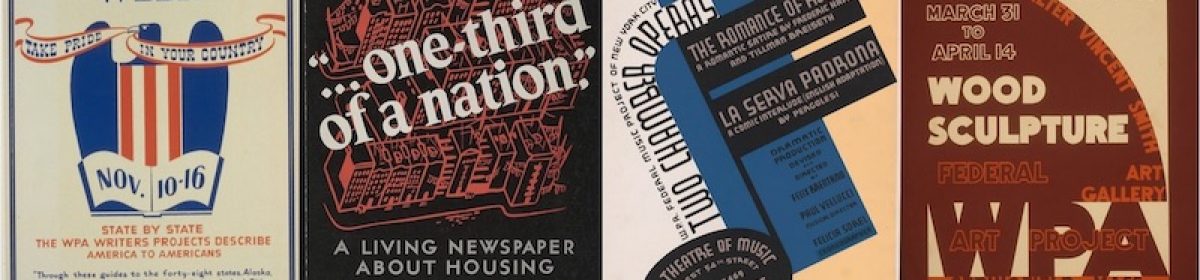
For my analysis, I wanted to capture the priorities of black people during the Depression. I asked myself, “What did black interviewees want to talk about? What did black writers seek in their interviews?”, basing my question off Maryemma Graham’s statement that “the largest single impact on black writing before the civil rights movement was really the WPA, not the Harlem Renaissance.” I was not able to glean as much as I wanted from the side of the writers, but within their interviews remained a healthy cache of information about the experience of black folk. 1
In my initial research, I began with specific black authors– namely Zora Neale Hurston and Ralph Ellison– whom I knew were in the Writers’ Project. I slimmed down my scope to smaller interviewers, authors that were not black but had excellently interviewed black people. I ended up with a decent corpus featuring all sorts of writers interviewing black men and women about their experiences.
In squaring my interviews up to the broad sources, I hoped to compare and contrast what black interviewees wished to discuss and what general interviewees wished to discuss. Thanks to Voyant’s extensive customisation options, it was quite simple to sift useless observations out of the results (dialect words, common words).

Something that truly fascinated me was that in the broader corpus, there were far more references to time and time periods. ‘Time’ and ‘year’ are two of the most prevalent words throughout the broad corpus– contrasted to the very few times ‘time’ or ‘year’ crops up in the work of the black writers. I was surprised how intuitively Voyant enabled this comparison, and how many avenues existed for me to deduce it. In closely examining my corpus, the interviewees would either talk about their general experiences (without mentioning dates) or specific events in their lives.

I also noticed that by far the biggest topic in my corpus was race. ‘Negro’ and ‘white’ were the most mentioned words, and according to Voyant, the most correlated with one another. However, within those documents, they were used just as signifiers (‘this man was a negro’) and seldom spoken of in a politicised manner. ‘White’, however, is more often used in politicised contexts (which is also where ‘negro’ and ‘black’ are most politicised). Racial terms are not included at all in the broader corpus.

I discovered that change was not a theme in black discourse. As the collective minds of American Yawp put it, “The Negro was born in depression. [The Great Depression] didn’t mean too much to him… Black workers were generally the last hired when businesses expanded production and the first fired when businesses experienced downturns.” The African-Americans of the 30s did not have the fiery rhetoric of their descendants in the 60s, and were often focused on their own lives, the joys and strifes laying there.
2.
- Nance, Kevin. “Roosevelt’s Writers.” Poets & Writers, 1 July 2010, https://www.pw.org/content/roosevelt039s_writers.
- Dana Cochran et al., “The Great Depression,” Matthew Downs, ed., in The American Yawp, eds. Joseph Locke and Ben Wright (Stanford, CA: Stanford University Press, 2018).
