African American Inequality during the 1930’s

Throughout the semester an ongoing topic that continued to catch my attention was African Americans during the Great Depression. In class we discussed their unequal rights, listened to slave narratives as well as explored the Green book which mapped out safe travels for them. A lot of these resources have come from a caucasian perspective or produced by one. I was curious to explore more of the African Americans perspective of life back in the 1930’s. 

From a previous reading from the American YAWP it was said that 1 and some of those difficulties included unemployment, unequal rights, programs excluding African Americans etc. Roosevelt at the time “… not only rejected such proposals as abolishing the poll tax and declaring lynching a federal crime, he refused to specifically target African American needs in any of his larger relief and reform packages”. African Americans attempted to take matters into their own hands by directly speaking to the president through recordings in hope it would get him to listen. There is a bundle of recordings from a variety of different ages, genders and situations but they all told their story and asked for the same thing. They wanted the president to try and help themachieve equal opprotunity. Hearing the recordings of people asking the president for help and knowing now that he did little to help them in the time affects us different. You can hear in their voices the hope they have for him to help and it is saddening that his helping hand was not extended to them. 

Earlier this semester we looked into how people were mapping racism over the years. The article Mapping Racism and Assessing the Effect of Digital Humanities explained that 2. African Americans were trying to do all that they could in order to reach the people and the president. Sound recordings, interviews and maps were brought to life to explain their struggles. Digital humanities have helped embody the emotions and hardships African Americans faced during this time period. 

Bond, Sarah Emily. “Mapping Racism And Assessing the Success of the Digital Humanities”, History from Below. Retrieved from https://sarahemilybond.com/2017/10/20/mapping-racism-and-assessing-the-success-of-the-digital-humanities/

“The Great Depression”, The American Yawp. Retrieved from http://www.americanyawp.com/text/23-the-great-depression/

“Dear Mr. President”,Dear Mr. President collection (AFC 1942/003), Library of Congress, https://www.loc.gov/item/afc1942003_sr39/


Thinking about Mobility and Music

A lot of the music written during this time of the 1930s was gathered together from differing cultures. Together, these songs would come to make up the conception of the American folk tradition. These songs (passed down or home-grown) were sought after by the Federal Music Project’s Alan Lomax in order to not only preserve the culture, but its relevance as well as the songs could find new meaning in the future. 3

What most interested me about these times is the focus on mobility which seems to become greatly apparent. People moving West for better lives, or people traveling the states in order to see what America has to offer in the form of scenery. Immediately, my mind went to the songs collected about travelling. The collecting of these audio clips makes these songs easier to access as well as make them live on through a digital world, making them accessible in the future.

“I’m Goin’ Down The Road Feelin’ Bad” 4 is a song that focuses on this kind of movement in the states. The narrator mentions going to where the climate suits her clothes, bringing to mind the idea of travelling in loose-fitting clothes that someone might have to wear back then thanks to the Depression. Having to wander around in those clothes would not be great, especially in inclement weather. The narrator’s repetition of this notion in the song plays into that “bad feeling” that they have, not only having to walk around in poor clothes, but also having been pent up in prison for some reason.

A favorite of mine is “Back to Arkansas” recorded in the Arvin FSA camp in California. 5 The themes of the poem line up well with the idea of travelling West back in the thirties. 6 Many people were uprooted thanks in part to the Depression. Tag teaming with the Dust Bowl, it really hit the farmers hard. People from Oklahoma and Kansas and many other places packed up and started migrating around to find land suitable to work as well as good paying jobs. These same details can be found wrapped in the words of “Back to Arkansas.”

Themes of mobility being found within and around these songs and poems really shows how it played such a role at the time. People going out and looking for something new, be it because of their clothing or because of their lifestyle or someone going somewhere, be it for travel and touring or finding a better life.

The Mexican Migrant Experience

What did the Lomaxes want to learn about Latino migrants during the Great Depression from their songs? John and Ruby Lomax were aware of the plight of the Hispanic migrants, and recorded some of their songs in the late 30s. Never accepted in America, never accepted in Mexico when local governments deported them, and subject to unjust deportations, the Mexican-Americans of the 1930s became an entire “lost Generation… people that were lost in Mexico, people without the documentation, people that were denied their right to a life as an American.” 7 Even so, Mexican immigrants had a significant stake in America, as they “had long been an integral part of agricultural production in the United States and were not newcomers on the scene even in 1940. In fact, when the Dust Bowl families arrived in California looking for work, the majority of migrant farm laborers were either Latino or Asian, particularly of Mexican and Filipino descent.” 8

Mexican migrants had to transition from “workers [that] were regarded as essential” during the 20s to aliens, “regarded as foreign… unwanted… not supposed to be here” during the 30s. Families had to cope with the greater scale of deportations that followed. All this translates into the songs John and Ruby Lomax recorded as a shocking chipperness. The migrant lullabies and children’s melodies are playful, frequently implementing sunny patters 9 and colourful lyrics 10. The Lomaxes and the Mexican singers chose to record the songs from the latter’s childhoods, songs designed to convey happiness and positivity to the youth, having nothing to do with ugliness or Mexican migrants’ situation. Buoyant songs glow 11 when compared to the African-American lullabies the Lomaxes recorded, which, perhaps in a truer but more weathered reflection of the era, are far more bluesy and sombre and quiet. 12 13

John and Ruby Lomax, along with the migrants who lent their voices for the project, seemed to want to convey the good feelings of a traditional childhood, not the very real malaise that came from the Great Depression. The lullabies of the migrants speak of sweet fruits and hugs 14 and covering up from the cold, a joyful little habitat away from the oppression buffeting Mexicans from all sides. I believe the folk lullabies the Lomaxes wanted the nation to remember are keenly related to the popular escapism propagated by the broader arts, performing the role of “a lifeline as well as a pleasant diversion, a source of optimism and energy as well as peerless insight” for underprivileged Mexican families. 15

The FMP in California

The New Deal government wanted to promote its policies with a federal control over the country. Actually, the states adapted the policies to their own circumstances. As a result, the New Deal shaped the states with diversity. How was music rediscovered through the FMP in California?

It is possible to come across sounds recording on the Library of Congress database. Sidney Robertson Cowell, who worked for the California Music Project, was facing cultural competition with music spreading in the 1930s through new technologies like the radio, movies, and similar centralized media16.

Cowell documented Anglo-American songs in Central Valley, Boomtown, Shasta County, California.

Cowell illustrated the story of merchants being stolen in the mountain17. She makes us take a glimpse into everyday life histories through music inspired from a mix of cultures in the 1930s.

Ward Ford, the performer, immerges us also into the life of farmers18. He sheds light on the usual troubles that farmers had to deal with.

The stories are sung, and it brings a different atmosphere. We want to listen to them, and we can picture in our mind the merchants being stolen in the mountain or the farmer who plows the field. We let them rock us. We suddenly imagine ourselves in Central Valley back in 1938 and what it was like to live at that time in California.

Radio Diaries shared content about Ballad for Americans19. Paul Robeson sings “I am the nobody who is everybody”. In other words, the radio documentary translates this expression as the way for Paul Robeson, and the folk culture in the 1930s, to talk to all Americans 20.

The FMP in California helped to enhance the folk culture and brought meaning to people life. Cowell, among others, was recording the voices of the time so we can hear them forever.

The FMP reminded people that it was still possible to live under the sun of California, singing your troubles, between joy and sorrow, the 1930s and the Great Depression.

Embedding audios helps to integrate the sound within the text. It results into a great uninterrupted flow. Nothing can stop the audience from feeling the atmosphere of the 1930s. It is also a direct and practical tool. Within a click, the audience can listen to the clip while reading. It allows a combination of reading and listening at the same time creating a dynamism within the text.

Blog Post 9

California, home to gold mines and new possibilities. In the midst of the Great Depression, people began to move west. Talk of a fresh start spread throughout the country. People packed up and left the East. Entire families left behind everything they knew and moved to a strange new place. Many people didn’t even get to California; they stopped and settled in the mid-west, or at the time, the Dust Bowl. However, with these mass migrations of people, came with it the spread of art and music. Folk music became huge. People writing and singing songs about everything one could think of. Songs like the one below. The type of singing changed as well. It began to vary from upbeat and happy to slower and emotional. A lot of the time, with folk music, the voice of the singer was lower and rougher, also demonstrated in the song below.

listen to this

This song is called “The Lowlands Low,” sung by Ward H. Ford, in 1938. “Recorded by Sidney Robertson Cowell in Central Valley, California on December 25, 1938. Forms part of a group of field materials documenting Warde Ford performing Anglo-American songs on December 25, 26, and 27, 1938, and Septebmer 4, 1939, collected by Sidney Robertson Cowell in Boomtown [Central Valley], Shasta County, California.”21 Sidney Robertson Cowell collected many recordings of different folk singers of the time. Her collection, California Gold: Northern California Folk Music from the Thirties, has played an essential role in understanding the lives of people in the thirties. Without her recordings of these folk songs, our view of music from that time would be different. Folk music had such an impact on the lives of Americans. It kept their hopes up. It helped them to believe that they would make it through this Depression. Folk music was not only big with the white population but with the people from all backgrounds. “The folk became figured not as failures or malcontents but as embodiments of America’s strength through diversity.” 22 Many of the musicians and singers of the time were from non-anglo backgrounds. This next song is sung by a Portuguese-American named, Mary Silveira.

listen

Also part of the California Gold: Northern California Folk Music from the Thirties collection, this song titled, “Bella aurora” or Lovely dawn, 23 expands on our knowledge of folk music. Sidney Cowell, saw the diversity in the music and the performers. This opening verse to “Bella Aurora,” gives us the upbeat and happy folk music that helped to get Americans through this rough patch. Prior to this collection of music, many of the non-anglo musicians never received any credit for their music. White Americans would here their music on the radio all the time. However, women, African Americans, Mexican Americans and many more rarely heard their music. If they did, it would be being sung by a White, Male, American not the original creator. 24

Folk Songs in the 1930s

The very first audio I listened to was from the collection “Voices from the Dust Bowl.” I’m not sure why I picked this specific audio and frankly, I can’t be sure if I even liked it or not. It’s certainly an intriguing song performed by Ruth Elliot in the summer of 1940 in Arvin FSA camp. The song, titled “The Old Apple Tree in the Orchard,” starts off quite beautifully and simple by depicting a child reminiscing about their father and an apple tree he planted. However, the song quickly takes an interesting turn when the singer then describes the father having an affair with a married woman, followed by his subsequent murder by the neighbors for doing so.25 This song certainly brought this question to mind: why were folk songs like this so popular for everyday Americans in the 1930s?

The song was sung as if it was a common children’s rhyme that just about everyone knew and loved. Despite what the lyrics suggest, the manner in which the performer is singing gives the song more of a humorous tone than a dark one. The song doesn’t seem to have too much historical meaning as it seems to have been written solely for entertainment purposes, but perhaps the reason for entertainment in the time period creates a historical relevance for the song.

The LA Times article by Morris Dicksten suggests that the arts, primarily music and movies, were not a means simply to distract Americans from their everyday struggles but was more of a means to counteract the crippling economy.26 Dickstein was probably right in that assertion, but for everyday Americans of that time, the arts likely meant more as a distraction than an economical support system that they wouldn’t see positive effects from for many years. In the Library of Congress article, “The Migrant Experience,” the author states that “when they were not working or looking for work…the migrants found time to engage in recreational activities,” such as “singing and making music.”27 “The Old Apple Tree in the Orchard” certainly sounds like a song that was likely created out of boredom to create a lighter atmosphere than the situations the Depression and Dust Bowl created.

Decolonizing our Discipline

Historical discourse includes and excludes events, people, and concepts very deliberately, especially in neocolonial societies. But it’s important to be aware of that there is the ability and responsibility to reconstruct the narrative. One method of decolonization is the prioritization of the voices of the colonized and oppressed. Through the recording of the first-hand experiences that marginalized people face, there lies an ability to prevent the erasure of the history that those in power were willing to hide.

Archival sources include letters, photos, memos, manuscripts, and more. But, often, the written records in an archive cannot emphasize the emotion or significance of an event the way that an audio source can. 28 The “Voices Remembering Slavery” collection in the Library of Congress could be very resourceful to someone analyzing memory, emotion, or how people remembered traumatic events from their own past. In addition, using oral histories as legitimate sources plays a larger role of helping shift away from archaic structures of oppression.

It is important to note that oral historical records aren’t meaningful in their nature, they can be highly problematic as well. In the Slave Narrative Collection, the interviewers were primarily white and that led to a perpetuation of stereotyping the informants, who were all Black. But as the Library of Congress notes, “the representations of speech in the narratives are a pervasive and forceful reminder that these documents are not only a record of a time that was already history when they were created: they are themselves irreducibly historical, the products of a particular time and particular places in the long and troubled mediation of African-American culture by other Americans.”29

The perspective through which the marginalized are analyzed and understood in academia has historically been that of white men. But by privileging oral history, there is an acceleration of the process of changing the rigid metanarrative that has been consuming our society for decades. In 1940, Juan Bautista Rael documented the Hispanic music and culture of the Northern Rio Grande.30 The documentation of Mexican wedding songs, alabados (hymns), and other forms of music provide proof that American culture has been created and shifted by various groups of people.31

Decolonizing the archives and history as a discipline means accepting oral histories as legitimate and useful sources. Although, because technology has made it so easy for everyday people to be a part of this archival process, I wonder how historians’ perspectives on the validity of oral histories will shift in the next decade. Just as the 1970s propelled a “new social history,” or a history that is written from the bottom up, the upcoming decades also have potential to facilitate collaborative collecting and further democratize the archive. 32

Music and the Depression

Music connects cultures. Music builds emotion. Music creates beauty.

It is only obvious that the Cultural New Deal would use music to grow a national identity and urge depression relief. Unlike other projects the Music Project was well received, and while it was in operation received very little opposition. But not long after the Federal Music Project became wide spread in it’s influence some of it’s popularity was torn out of History. How could something so widely accepted as AMERICAN be just as quickly torn out of societal norms?

Unlike the controversial disbandment of the Federal Theatre Project the Cultural New Deal created the Federal Music Project. This project focused on education and national identity. Through the efforts of this project the glorious world of American Music was discovered. Folk music became distinctly American, and people found the new trend highly agreeable. the Federal Theatre Project did not present to the people a viable reason for it’s funding and distribution. It had educational programs and catered to a wide American audience.

The most widely accepted piece to come out of the Federal Music Project, accepted by the Republican Party, The Democrats, and even the Communist Party  was the Ballad for Americans. 33

This incredibly unique piece gave America an image of their reviving country to grasp onto. Written by a gay man and sung by a black man it’s surprising that it was so widely accepted in an age when the people who created it weren’t accepted. The project included other pieces that built a more regional perception of American and cultural identity. The same broadcast that presented The Ballad for Americans presented an exotic image of Hawaii through The Hawaiian Pursuit of Happiness. 34

This music presents a picturesque image of America, and appeals to all who have fallen prey to the Great Depression. Several years later that all changes. Once anti-Communist sentiments settled in The Ballad for Americans legacy, and it was torn from the music books. The songs of the Federal Music Project, whether regional or wide spread, have the people of the 30’s a means form of art all could grab onto as their own, but the 30’s had to end some time. These overarching themes of a need for an identity shows the 30’s was a time of great rebuilding, and the Federal One Projects used all they had to rebuild the culture.

The WPA Documenting the American Folk

The Works Progress Administration, founded in 1935 as part of FDR’s New Deal, set out to document American culture. The methods that they used to record the folk vary from spoken interviews, songs, photographs, written interviews, and state guides.

As part of the Federal One project the Federal Writers Project was tasked with reaching out and recording the stories of the American people. 

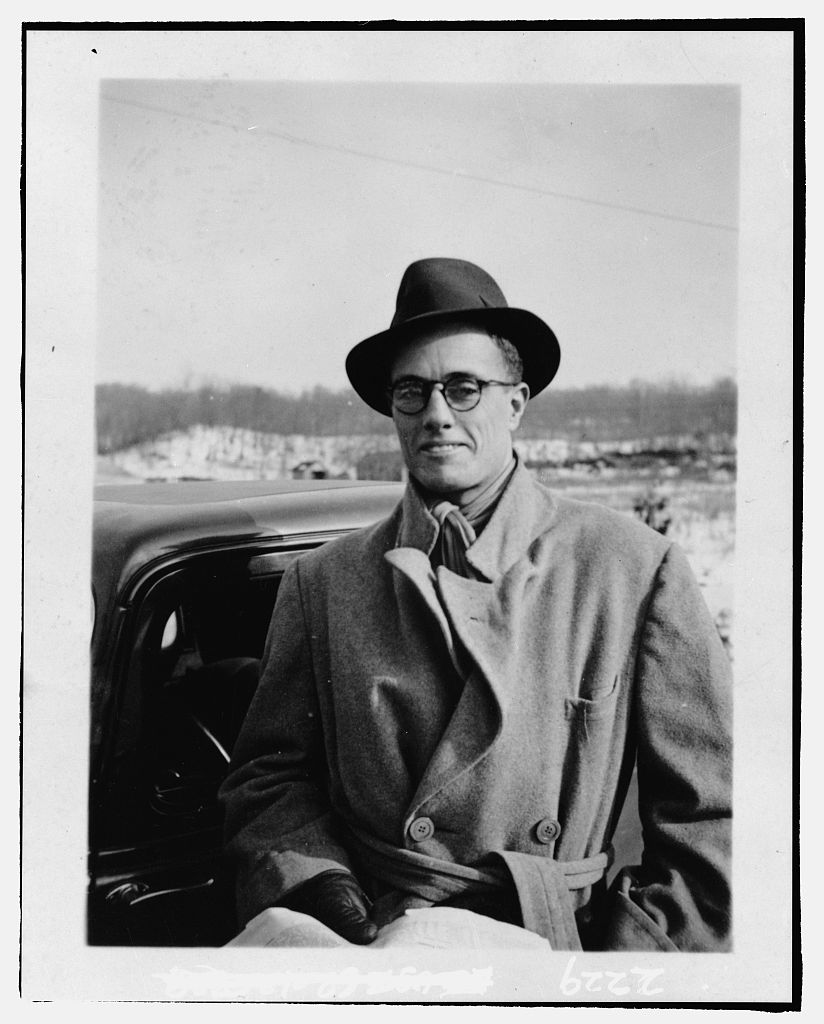
The FWP was managed at both the state and federal levels. John Lomax was a folklore editor and in March 1939, he and his wife Ruby set out on a journey that would traverse 6500 miles across the southern states. 34

John Lomax out on the road. 35

They made recordings of folksong of all kinds, ballads, cowboy songs, fiddle tunes, lullabies, and many more. In all there were more than 25 hours from over 300 different performers, all with their own unique story to tell and culture to represent. 36

 In addition to folksongs they recorded sermons like the one in Houston, Texas, April 12, 1939 by John Lowry Goree. 37

John Lomax was not the only FWP contributor to take to the open road. In the 1930’s Sidney Robertson Cowell was one of the folk music collectors associated with the Northern California WPA. She was perhaps the greatest activist in California when it came to collecting and documents the migrant experience. She interviewed and recorded the culture and songs of immigrants and their families. 38

As part of her collection Cowell also took still photographs of the people she chronicled. Her endeavor was “ one of the earliest ethnographic field projects to document European, Slavic, Middle Eastern, and English- and Spanish-language folk music in one region of the United States”. 39

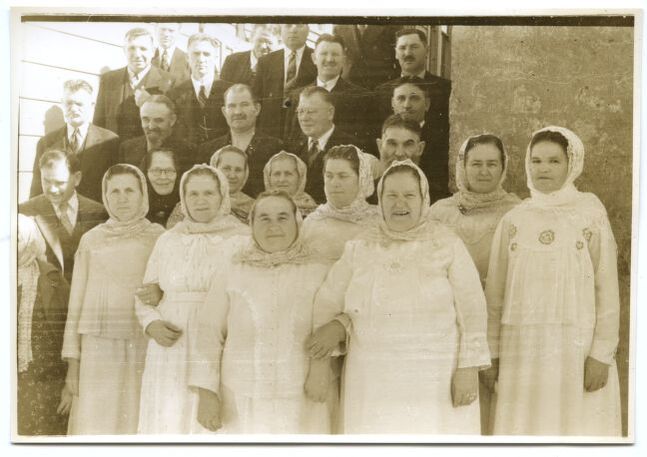
 “Less than a quarter of the total adult group.” Forms part of a group of field materials documenting unaccompanied singing and preaching in the Russian language performed during services of the Russian Molokan Church, Potrero Hill, San Francisco on September 14, 1938, collected by Sidney Robertson Cowell. 40

In addition to the FWP other Federal One Projects documented the American folk. The Federal Music Project and Farm Security Administration also fell under the Works Progress Administration. 41

The Federal Music Project was regionally managed and really showed the distinctiveness of the different parts of the US. This was vital, the southern hymnals were very different from the migrant songs of the people in Northern California. Just as the people were distinct so too was their music. 42

One project took place in the Federal Music Project Office, Jacksonville, Florida. The performer, Zora Neale Hurston sang a number of songs that helped to document the way that music featured in the culture and work of slaves. 43 Many of them are “work” songs, their beats keep time for the task they are doing. The music that the FMP recorded is a treasury of folklore, some telling stories and others long traditions from generations past.

The Farm Security Administration took more than 270,000 photographs during its effort to document the trials and tribulations of the American people across the country. The famous Migrant Mother image taken by Dorothea Lange is part of this collection. It shows the lives of the people displaced by the Dust Bowl and downtrodden from the Great Depression. It documents the many camps that sprung up and the people that lived there. The very people that the New Deal set out to help. These photos are perhaps the best record of how the New Deal was helping people.

The famous Migrant Mother 44

Throughout the New Deal era the Works Progress Administration sought to define the American people. What they did was document just how much of a “melting pot” the United States really is. Through the recording of local music, written interviews, and thousands of photographs the Federal One project illustrated the unique and engaging American Folk.

Hear It for Yourself- Folk Music

Personally, I associate the culture of the 1930s with the folk tunes produced by artists such as Woody Guthrie. Of course, there are dozens of folk artists who found success in this time, but not all of them have permeated the modern culture as much. So, it is interesting for us as observers from the 21st century to look at the music produced in the 30s, the common themes and tunes, and how it reflected the reality of the era.

First, it’s important to reflect on the widespread and unspecific nature of the “folk.” There is no single definition for the folk music and culture that became popular in the 30s, and this is part of its strength. The folk movement didn’t idealize a homogenous America, but acknowledged strength through diversity45.

At the same time, the tone46 of folk songs of the time often reemphasized the economic reality faced by millions of Americans during the depression. Slow, sad sounding tunes accompanied individuals who faced a slow, sad economic depression.

Still, not all folk songs maintained the same tone, especially those that had been passed down for a longer time via an oral tradition.

The connective tissue tying all folk music together is a sense of authenticity about the reality of America. This includes an embrace of immigrants and the music they brought with them47 from their own cultures.

Both of the recordings in this post are a result of the Federal One Project’s efforts to encourage and capture the music and folk culture of the time. For one reason or another, these songs were deemed as important enough to listen, record, and maintain over the course of 80 years. The songs recorded as part of the project reflected the reality of American culture, as opposed to just what the mass media produced or valued48.

The fact that we are able to discuss and listen to these recordings decades later and draw conclusions about life during this period speaks to the value of the Federal One Project. Although the projects, especially the Federal Theater Project, received a great deal of scrutiny for their focus on the arts in a time of financial hardship, they have proven their value from a historical perspective. Even without consideration to the direct benefit that the projects had to the artists and individuals involved, the projects provided value to future generations.

In this instance, I believe that the inclusions of sound greatly emphasize the points of the text. I can describe a song as sad or foreign or celebratory, but none of that compares to allowing an audience to experience that for themselves. It’s similar to a game of telephone, every step along the way may lose an aspect of the original recording or song. So, by allowing the audience to hear the song for themselves, some steps are removed, and the audio can be experienced firsthand.

css.php